Every advertisement you click, every email that persuades you to buy a product, and every product description that convinces you to make a purchase has one thing in common: copywriting.
Copywriting is one of the most valuable skills in modern marketing. Whether you're running a business, building a personal brand, selling products online, or looking for a flexible career, understanding copywriting can give you a significant advantage.
But copywriting isn't simply about writing well. It's about understanding people, solving problems, and using words strategically to encourage readers to take action.
In this guide, you'll learn what copywriting is, how it works, why businesses rely on it, the different types of copywriting, the skills required, and how you can become a successful copywriter.
What Is Copywriting?
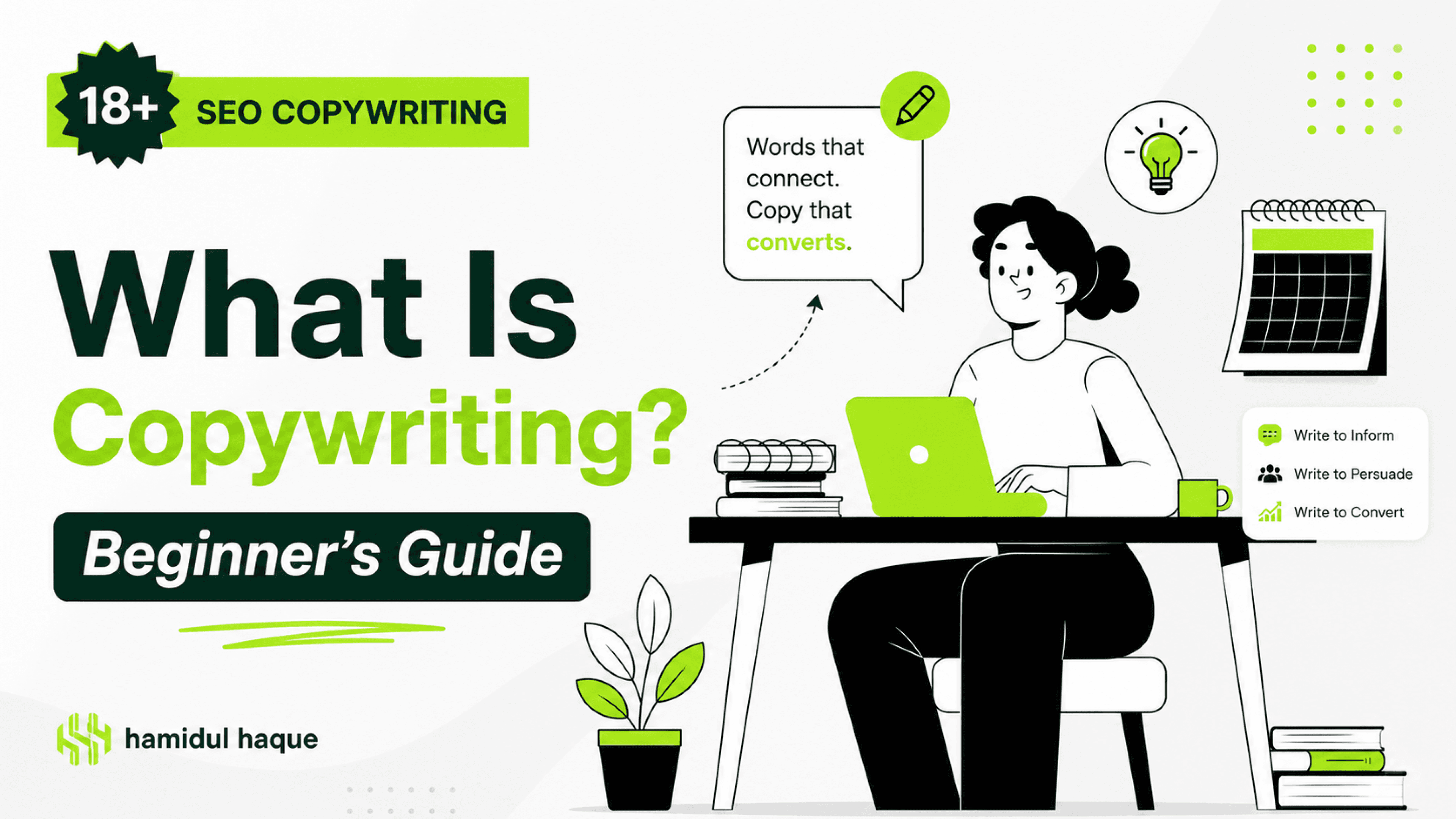
Copywriting is the process of writing persuasive content that encourages readers to take a specific action.
That action might include:
- Buying a product
- Signing up for a newsletter
- Downloading an ebook
- Booking a consultation
- Clicking a link
- Requesting a quote
- Following a brand on social media
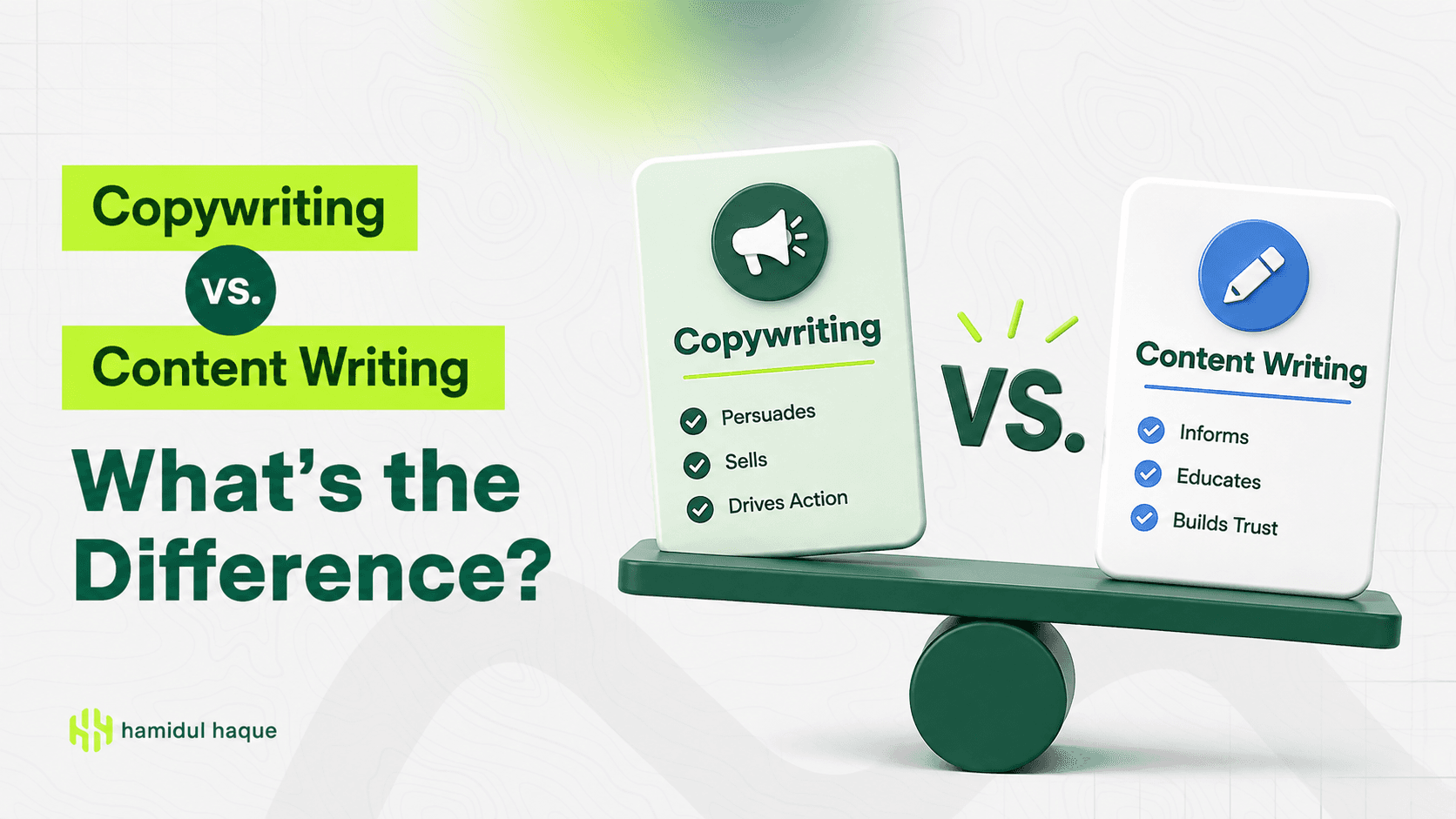
Unlike general content writing, copywriting focuses on conversion. The goal isn't simply to inform readers but to persuade them to act.
The text created by a copywriter is known as "copy."
Examples include:
- Advertisements
- Sales pages
- Email campaigns
- Landing pages
- Product descriptions
- Social media advertisements
- Website homepages
- Video scripts
- Brochures
Every successful business uses copywriting because effective words influence buying decisions.
Why Is Copywriting Important?
Businesses compete for attention every day.
Customers are constantly exposed to advertisements, emails, videos, and social media posts. To stand out, businesses need compelling messages that capture attention quickly.
Good copywriting helps businesses:
- Increase sales
- Build customer trust
- Improve brand awareness
- Generate leads
- Increase website conversions
- Strengthen customer relationships
- Improve advertising performance
Without persuasive copy, even excellent products may struggle to sell.
Copywriting vs Content Writing
Many beginners confuse copywriting with content writing.
Although both involve writing, they have different objectives.
| Copywriting | Content Writing |
|---|---|
| Persuades readers | Educates readers |
| Focuses on sales | Focuses on information |
| Encourages action | Builds authority |
| Short and persuasive | Usually longer and detailed |
| Used in advertisements and sales pages | Used in blogs and articles |
For example:
A blog explaining "How to Choose Running Shoes" is content writing.
A landing page convincing readers to purchase running shoes is copywriting.
Both are valuable, but they serve different purposes.
Types of Copywriting
Copywriting covers many specialisations. Here are the most common ones.
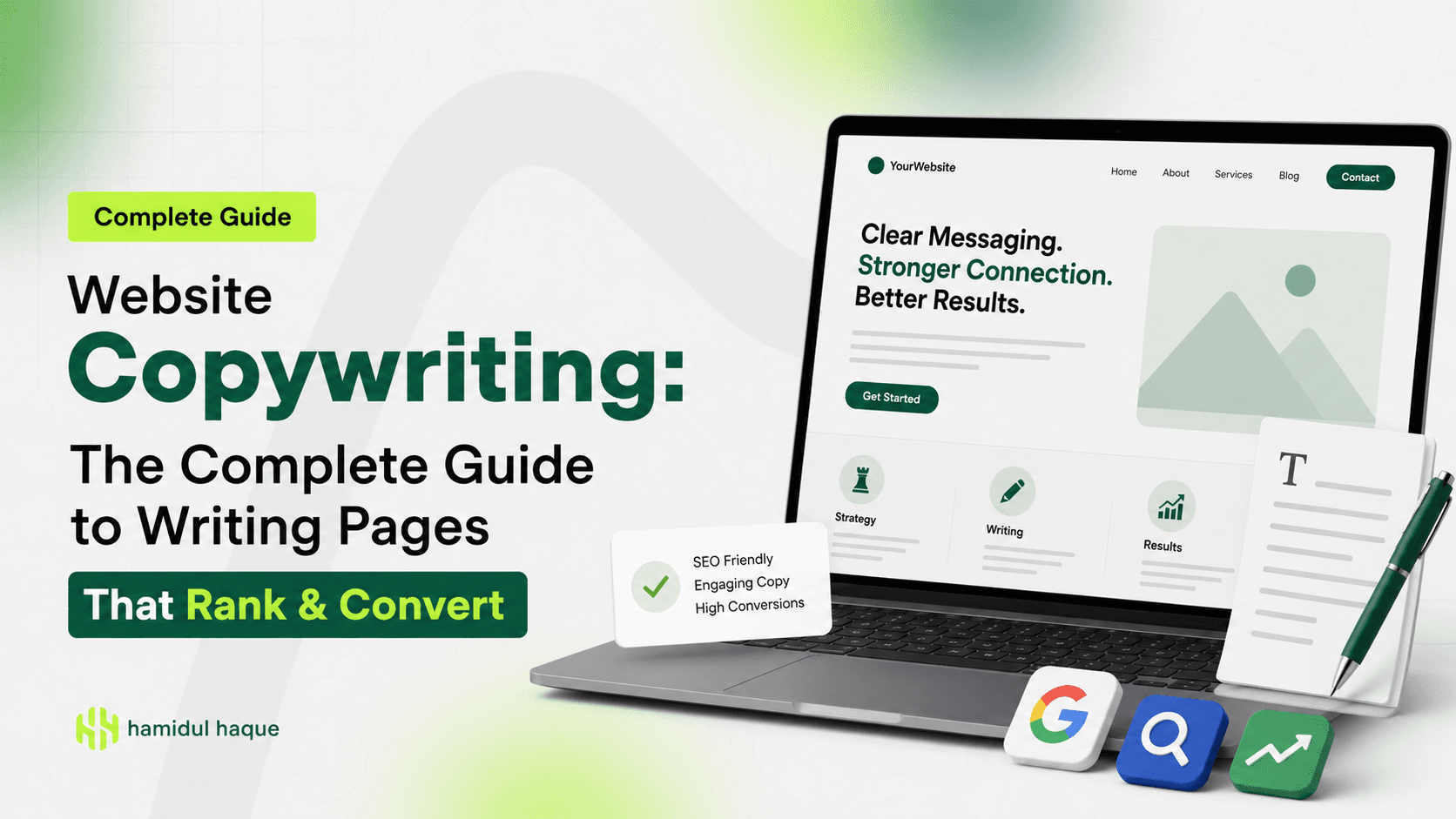
1. Website Copywriting
Website copy helps visitors understand a business and encourages them to become customers.
Examples include:
- Homepages
- About pages
- Service pages
- Contact pages
Good website copy is clear, engaging, and customer-focused.
2. SEO Copywriting
SEO copywriting combines persuasive writing with search engine optimisation.
The goal is to:
- Rank higher in search engines
- Attract organic visitors
- Convert visitors into customers
SEO copywriters naturally include relevant keywords while maintaining readability.
3. Email Copywriting
Businesses use emails to:
- Promote products
- Announce offers
- Welcome new subscribers
- Build relationships
Strong email copy increases open rates, click-through rates, and sales.
4. Social Media Copywriting
Every social media caption is a form of copywriting.
This includes content for:
- X
- TikTok
The aim is to encourage engagement or drive traffic.
5. Advertising Copywriting
Advertisements require concise, persuasive messages.
Examples include:
- Google Ads
- Facebook Ads
- Display ads
- Print advertisements
- Billboards
Every word matters because space is limited.
6. Product Copywriting
Product descriptions help customers understand why they should purchase an item.
Instead of listing features, great copy highlights benefits.
For example:
Feature: "5000mAh battery."
Benefit: "Stay connected all day without worrying about charging."
Benefits sell products more effectively than features alone.
7. Sales Page Copywriting
Sales pages are designed to convert visitors into buyers.
They often include:
- Attention-grabbing headlines
- Customer pain points
- Product benefits
- Testimonials
- Guarantees
- Strong calls to action
Sales copywriting requires an understanding of customer psychology.
Essential Elements of Good Copywriting
Successful copywriters rarely rely on creativity alone.
They follow proven principles.
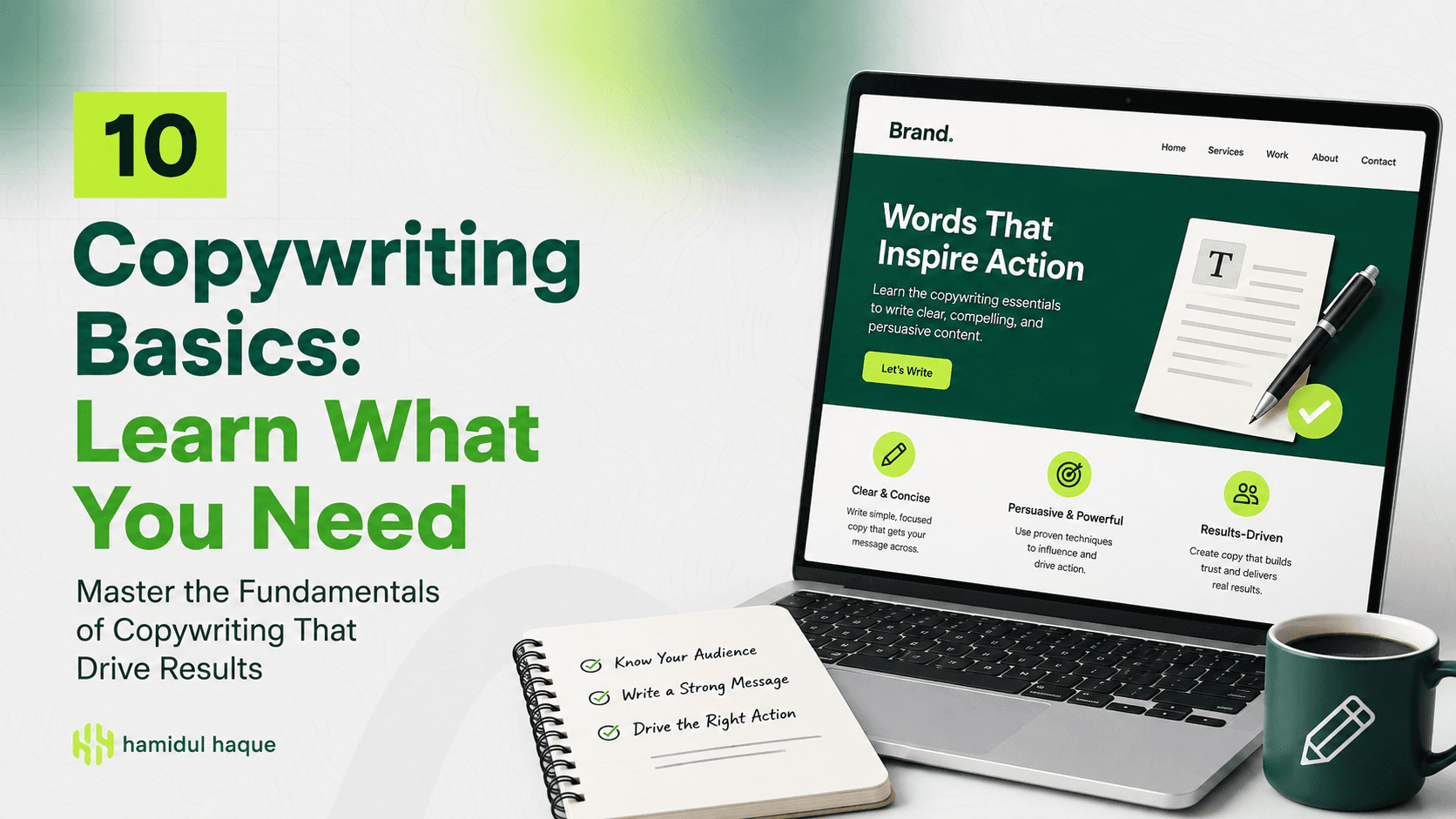
Know Your Audience
The first rule of copywriting is understanding who you're writing for.
Ask questions like:
- What problem do they have?
- What are they trying to achieve?
- What motivates them?
- What concerns them?
The better you know your audience, the more persuasive your copy becomes.
Write Strong Headlines
The headline determines whether someone continues reading.
Examples:
Weak: "Our Marketing Services"
Better: "Grow Your Business Faster with Results-Driven Marketing"
A strong headline sparks curiosity or promises a benefit.
Focus on Benefits
Customers don't buy products.
They buy outcomes.
Instead of saying:
"Our software automates invoices."
Say:
"Save hours every week by letting our software handle your invoicing automatically."
Benefits connect emotionally.
Keep It Simple
Great copy is easy to understand.
Avoid:
- Long sentences
- Complex vocabulary
- Unnecessary jargon
Simple writing reaches more people.
Include a Clear Call to Action
Every piece of copy should guide readers toward the next step.
Examples include:
- Buy now
- Start your free trial
- Contact us today
- Download the guide
- Get your quote
Never assume readers know what to do next.
Skills Every Copywriter Needs
Successful copywriters develop several important skills.
Research Skills
Great copy starts with understanding the audience, competitors, and product.
Research often takes longer than writing itself.
Communication Skills
Copywriters explain ideas clearly.
Complex messages become simple and persuasive.
Creativity
Creativity helps copywriters present familiar products in fresh and engaging ways.
Marketing Knowledge
Understanding customer behaviour improves copy significantly.
Knowledge of:
- Branding
- Consumer psychology
- Sales funnels
- Marketing strategies
can make copy much more effective.
Editing Skills
First drafts are rarely perfect.
Professional copywriters spend considerable time:
- Removing unnecessary words
- Improving clarity
- Strengthening headlines
- Refining calls to action
Editing is where good copy becomes great.
Examples of Copywriting
Here are a few simple examples.
Advertisement
"Transform your mornings with coffee that keeps you energised all day."
Product Description
"Enjoy crystal-clear sound and up to 30 hours of battery life, whether you're commuting, working, or relaxing."
Email Subject Line
"Your Exclusive 20% Discount Ends Tonight"
Call to Action
"Start Your Free Trial Today"
Each example has one purpose: encourage action.
How to Become a Copywriter
Starting a copywriting career doesn't require a university degree.
Many successful copywriters are self-taught.
Learn the Basics
Study:
- Marketing
- Consumer psychology
- Sales
- Persuasive writing
Read advertisements and analyse why they work.
Practise Every Day
Writing improves through repetition.
Rewrite:
- Advertisements
- Landing pages
- Emails
- Product descriptions
The more you practise, the stronger your skills become.
Build a Portfolio
Clients want proof of your abilities.
Create sample projects such as:
- Website copy
- Email campaigns
- Social media ads
- Product descriptions
A portfolio often matters more than qualifications.
Learn SEO
SEO copywriters are in high demand.
Understanding keyword research and search intent makes you more valuable.
Find Clients
Many copywriters begin by working with:
- Small businesses
- Start-ups
- Marketing agencies
- Freelance platforms
- Personal connections
As experience grows, higher-paying opportunities become available.
Common Copywriting Mistakes
Beginners often make the same errors.
Avoid these mistakes:
Writing for Yourself
Always write for your audience.
Using Too Many Buzzwords
Simple language is usually more persuasive.
Ignoring Customer Benefits
Focus less on features and more on outcomes.
Weak Headlines
Your headline is often the most important sentence.
No Call to Action
Always tell readers what to do next.
Is Copywriting a Good Career?
Yes.
Demand for skilled copywriters continues to grow because businesses constantly need persuasive content.
Copywriters may work:
- As freelancers
- In marketing agencies
- In-house for companies
- As consultants
- For their own businesses
The profession also offers flexibility, remote work opportunities, and continuous learning.
Those who combine copywriting with SEO, digital marketing, or AI-assisted content creation often have even greater career prospects.
Final Thoughts
Copywriting is much more than writing attractive words.
It's the art and science of influencing decisions through clear, persuasive communication.
Whether you're promoting a business, selling products, building a website, or starting a freelance career, learning copywriting is an investment that can deliver long-term value.
The best copywriters understand their audience, communicate clearly, focus on benefits, and always guide readers toward a meaningful action.
Like any skill, copywriting improves with consistent practice, feedback, and real-world experience.
If you start learning today, you'll gradually develop the ability to write words that don't just inform people but inspire them to take action.
Frequently Asked Questions (FAQs)
1. What is copywriting in simple words?
Copywriting is writing persuasive content that encourages people to take a specific action, such as buying a product, signing up for a service, or clicking a link.
2. Is copywriting different from content writing?
Yes. Copywriting focuses on persuasion and conversions, while content writing primarily educates, informs, or entertains readers.
3. Do I need a degree to become a copywriter?
No. Most clients value strong writing skills, marketing knowledge, and a solid portfolio more than formal qualifications.
4. What skills are needed for copywriting?
Important skills include persuasive writing, research, communication, creativity, editing, marketing knowledge, and understanding customer psychology.
5. Can beginners learn copywriting?
Absolutely. With consistent practice, study, and portfolio building, beginners can become successful copywriters.
6. Is copywriting a good career?
Yes. Businesses of all sizes need persuasive content, making copywriting a valuable and flexible career with opportunities for freelance and full-time work.
7. How long does it take to learn copywriting?
The basics can be learned within a few months, but mastering copywriting usually takes ongoing practice and real-world experience.


 Hamidul Haque
 Aug 23, 2026