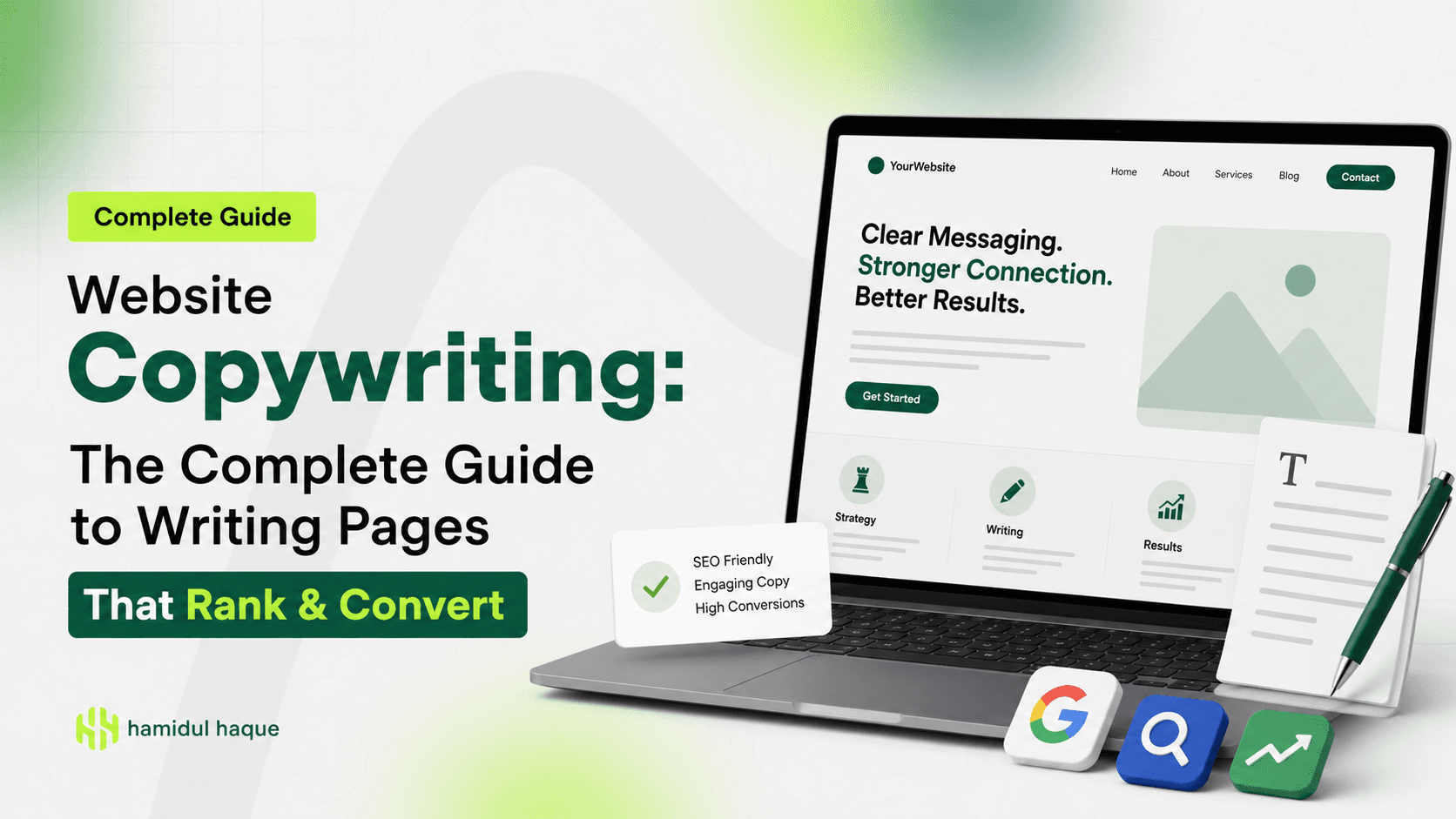
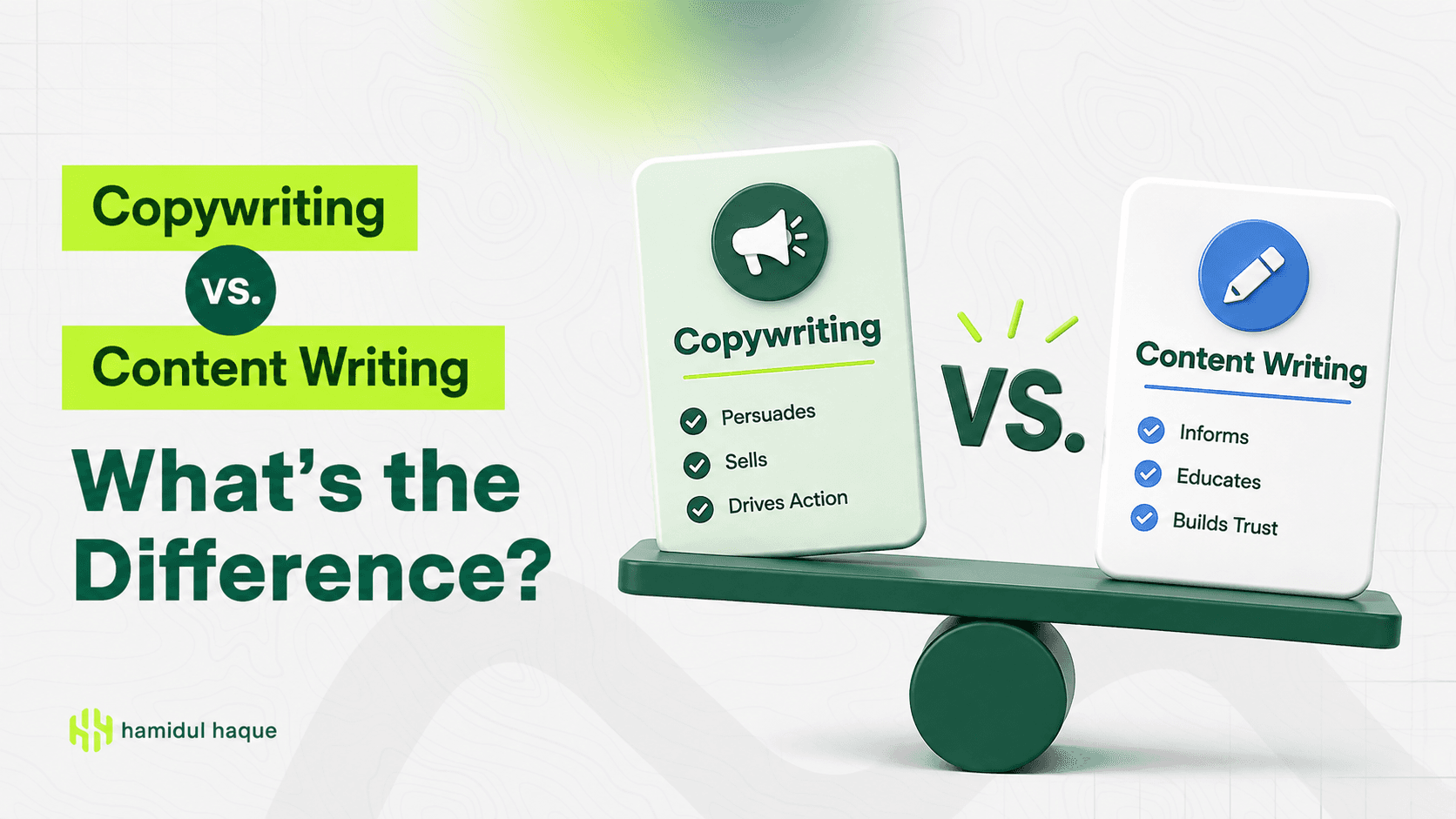
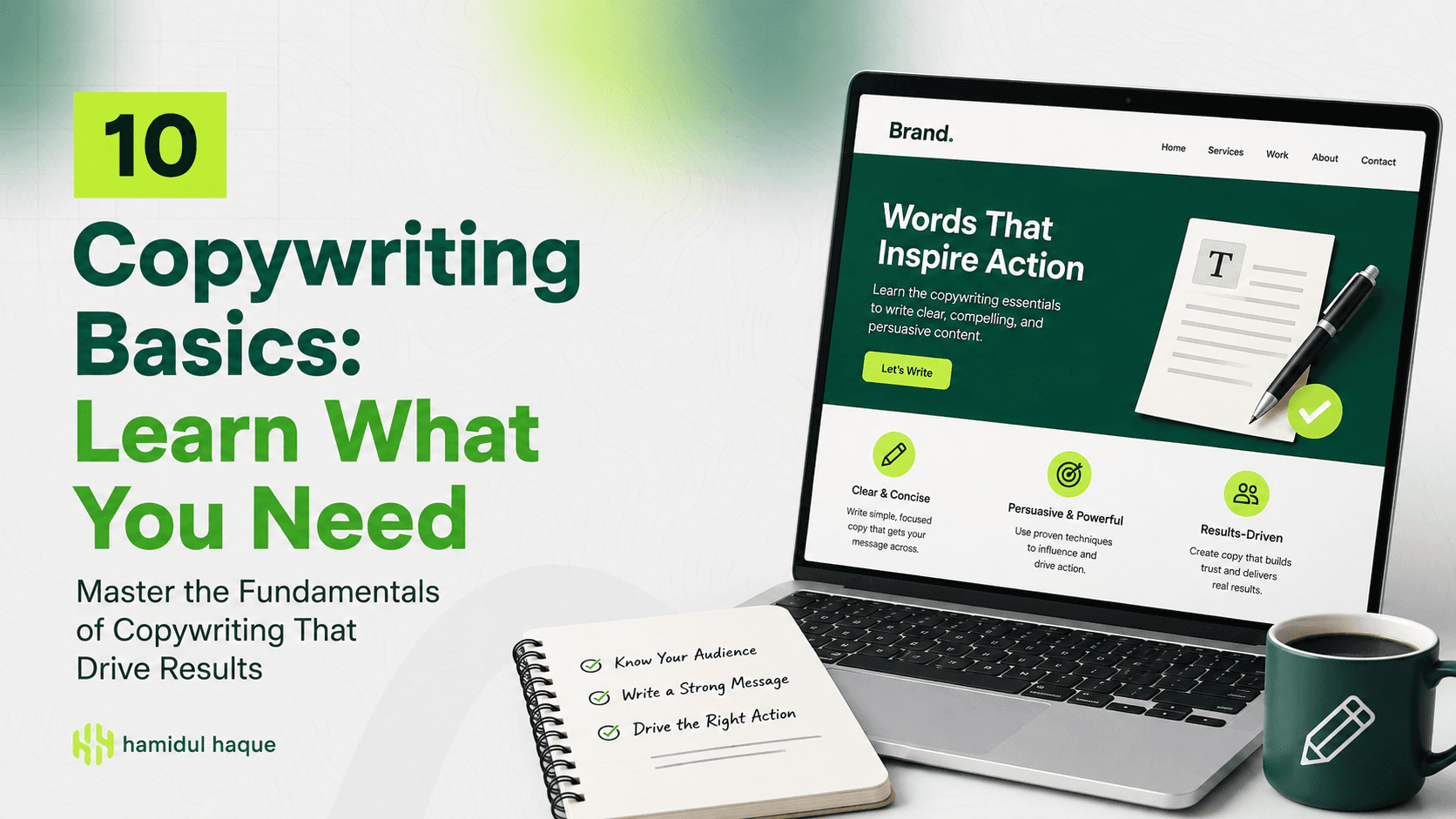
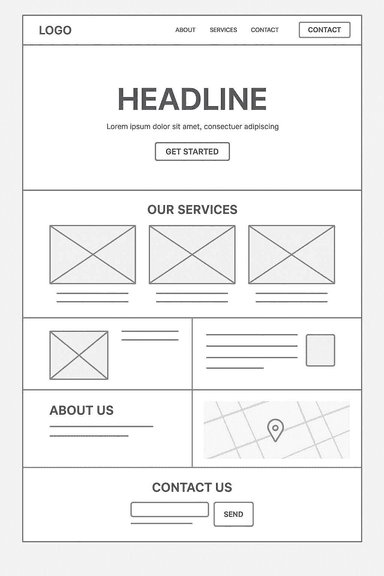
Page Structure

/// Conversion & SEO Copywriting
I research your keywords, competitor pages and write every page myself, structure the copy so Google can rank it and a visitor can act on it. No handoff between an SEO specialist and a copywriter. No context lost in translation.





Most SEO copywriting gets handled by someone who never talks to your designer.
So you end up with copy that hits the keyword count but ignores how the page is actually laid out, or a design that looks sharp but has no strategy behind the words. Then a third person tries to stitch the two together after the fact.
That's how you get pages that rank on page four, or pages that rank fine and still don't convert. The gap isn't talent. It's the handoff.
I write the copy and design the page it lives on, so the keyword strategy and the layout come from the same read of your audience, not two separate people guessing at each other's intent.



/// WHAT YOU GET
Page Structure
Web Copy
SEO Strategy

Sales Copy

Before a sentence is written, the page gets an outline: what each section has to do, in what order, and which question it answers for the reader. Copy that arrives without one is decoration — it reads well and moves nobody.
Every page written for the search a real buyer types and the decision they are actually making. Headlines, sections, and calls to action drafted as one argument rather than as blocks to be filled in later.
Keyword and intent research grounded in what already ranks for those terms, mapped to the pages you have and the ones you are missing. You get the plan behind the copy, not just the copy.
The pages where money changes hands — offers, pricing, and landing pages — written to handle objections in the order readers raise them, and to make the next step obvious rather than optional.
/// Why My SEO Copy


I target keywords that signal buying behavior rather than just high search volume. By matching search intent with correct page elements, the traffic is far more likely to convert.
Good copy is useless if it's placed incorrectly. I structure the page layout so that information flows naturally from the initial hook, through the key benefits, right to the CTA.
Since I write the copy, design the Figma wireframe, and develop the front-end, nothing gets lost in translation. What you approve in writing works perfectly in the final layout.
I avoid keyword stuffing. I weave in relevant phrases, synonyms, and secondary keywords naturally, ensuring the text reads beautifully for readers while checking all search boxes.
Launching is just step one. I review search performance, bounce rates, and scroll-map analytics post-launch to tweak headlines, hooks, and CTAs for better performance over time.
/// Who I Write For
Search traffic is only worth having if the people arriving were going to buy. These are the situations where that lines up.
Feature pages, comparison pages, and use-case pages for products whose buyers search for the problem long before they search for the category name. Usually the gap is that the site describes the software and the buyer is describing their Tuesday.
Consultants, agencies, law firms, and finance businesses selling judgement rather than a product. Copy has to establish that the judgement is sound before price is ever mentioned, which is a different job from listing what you do.
Category and product pages that need to rank without pushing the products below the fold. Most stores have hundreds of pages competing with each other for the same term without anyone having decided which one should win.
Location pages written for a place rather than templated with the city name swapped in, which is the version that stops ranking the moment a competitor writes a real one.
A blog that used to bring traffic and quietly stopped, or a site that ranks for things nobody buys. The fix here is usually reorganising and rewriting what exists, not publishing more on top of it.
/// Our Work Process
Before a single line gets written, I dig into your brief, your market, and the pages already ranking for your keywords. I map search intent, audit what your competitors rank for, and cluster the keywords worth targeting. You approve the plan before I write a word.

Now I write. Every page gets drafted for the person reading it first, then structured so Google can read it too. Headlines, body, CTAs, all built around one keyword strategy and one clear message. You review the copy before anything moves to design.

The approved copy goes straight into Figma, designed by the same person who wrote it. Layout follows the message, not the other way around. Visual hierarchy points to the CTA, and nothing gets lost translating words into a page.
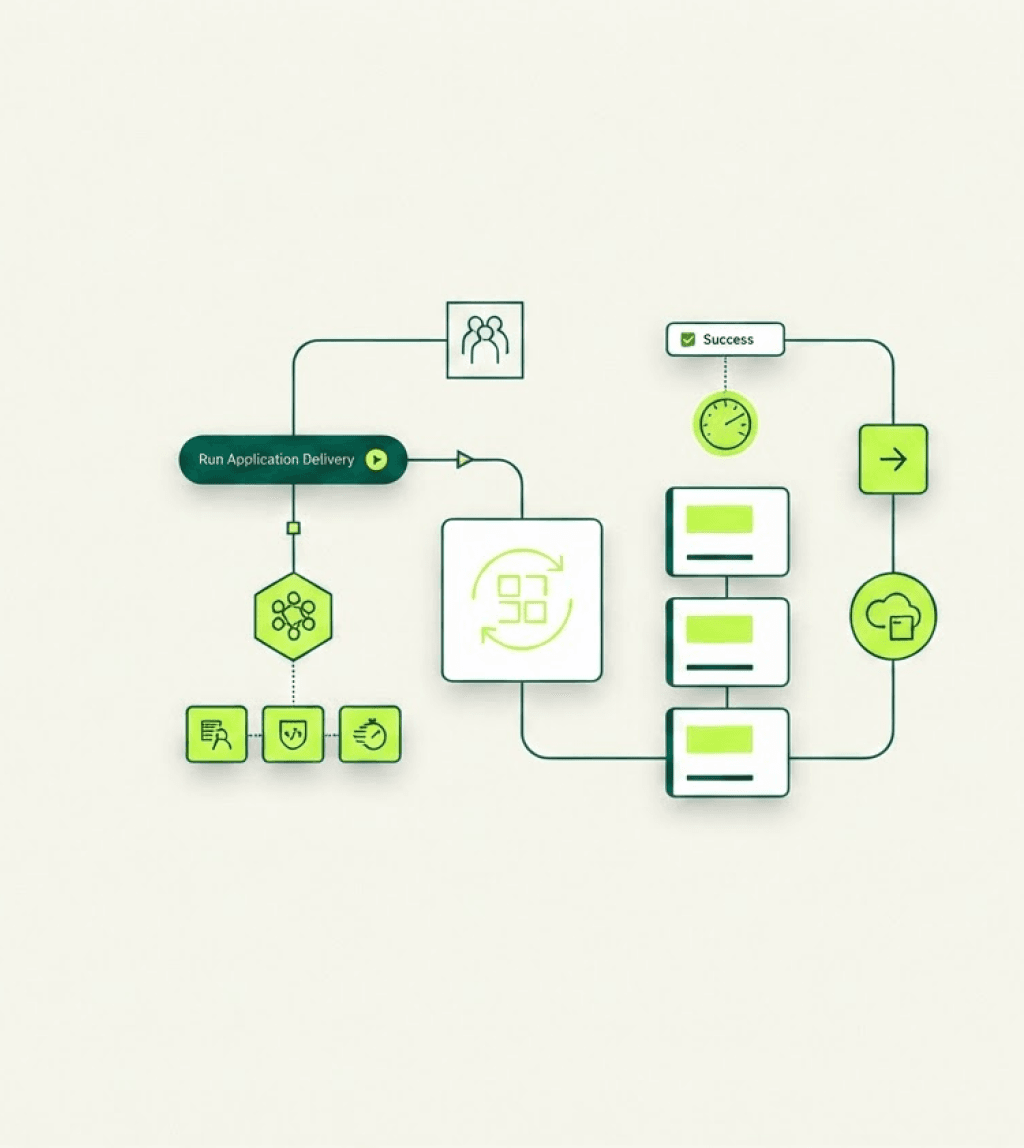
I ship the page with AI-assisted development, so what you approved is exactly what goes live. Then I set up tracking to watch how it performs in search and where visitors act, ready to refine once real data comes in.
/// What I Won't Do
Great SEO copy is as much about what I refuse to do as what I deliver. These are the shortcuts I turn down, keeping your content credible, compliant, and built to rank for the long run.
I write every word from scratch. Google penalizes low-quality AI spam, and readers bounce. You get authentic, researched copy that builds trust and actually ranks.
Keywords are woven in naturally based on intent and readability. I write copy for humans first to maximize conversion rates, and optimize for search algorithms second.
Genuine SEO takes time and consistent execution. I promise transparent strategy, correct optimization, and measurable progress, rather than quick-fix hacks that trigger Google penalties.
I never start writing without mapping search intent and analyzing competitor pages first. A page without a research-backed strategy is just a collection of words that won't rank.
Years of experience
Repeat clients
Successful projects
Words shipped

/// How It Gets Measured
Copy is easy to argue about and harder to score. Agreeing the measures upfront is what turns a rewrite from a matter of taste into something either of us can check.
Position for the specific searches your customers make, not a vanity term with volume and no intent. A page that reaches number one for something nobody buys has cost you the effort and returned nothing.
Appearing in results is the setup; being clicked is the outcome. Titles and descriptions are written and revisited against real click-through data in Search Console rather than left as whatever the CMS generated.
Time on the page, scroll depth, and the action at the end of it. Traffic that arrives and leaves immediately is a signal that the page promised one thing in search and delivered another.
Which page a lead read before they contacted you, so budget goes to the pages that actually earn rather than the ones that feel important.
An honest caveat: SEO results are slow and partly outside anyone's control. New pages typically take months to settle, and anyone quoting you a ranking by a date is quoting something they cannot deliver.
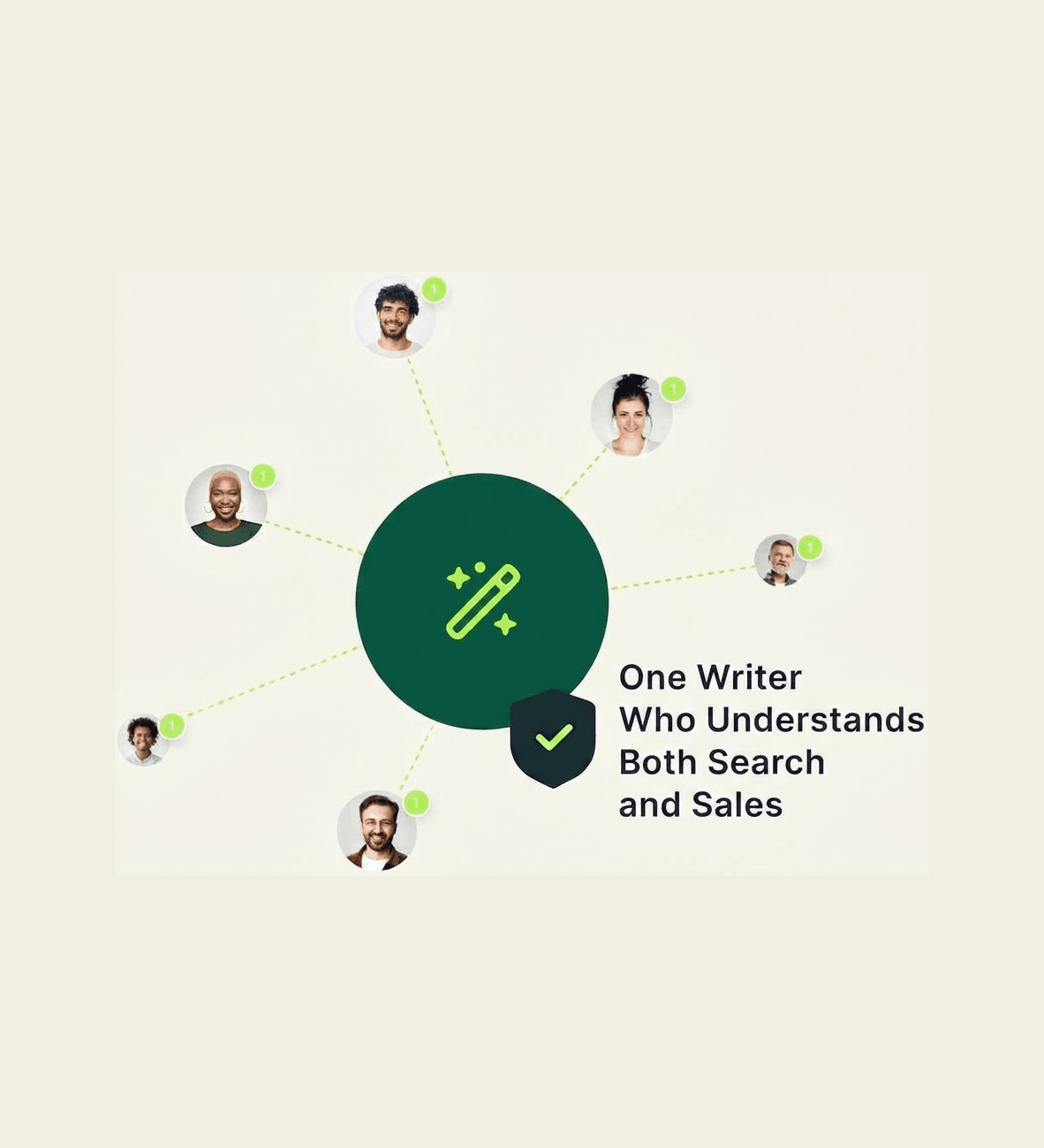
Most agencies split your project across a keyword researcher, a writer, and a designer, and the strategy leaks at every handoff. I handle the entire chain myself, so your copy is researched, written, and structured to rank on Google and convert the visitor once they land.
Search-Intent Research
Human-First Copywriting
Conversion-Focused Structure
Transparent Reporting
Pages Ranked
Avg. traffic lift
Happy Clients
Industry
/// What I Write
High-intent landing pages built to convert one audience for one campaign. I match the headline to the ad or keyword that brought the visitor in, then structure every section to move a single clear action forward, no distractions, no dead ends.
/// Project Scope
Every project is quoted on its actual scope. A single landing page and a fifty-page content rebuild are not the same work, and pricing them from the same package only helps whoever wrote the package.
A homepage, a service page, and a long comparison article take different amounts of research and different amounts of writing, in that order.
How much competitor and keyword analysis the topic needs, and whether subject-matter interviews are involved. Technical products cost more here because the reading is longer.
Rewriting means auditing what is there, deciding what earns its place, and handling redirects for anything removed — work that a blank page does not carry.
Whether you need the plan as well as the pages: topic clusters, internal linking, and a publishing order rather than a set of documents.
How many review rounds are included, who signs off, and whether the schedule is normal or compressed around a launch.
Testimonial

I have had a great experience working with him. We were working on a project about a saas app. He played a good role in the collaboration of copywriting and UI design. Recommended.
Founder, GoalFlow


We needed a website UI for Bangla Venture that looked professional and guided the user without friction. Hamidul, nailed the visual hierarchy. It’s a pixel-perfect design that perfectly captures what Bangla Ventures stands for.
Founder, Banglaventure


Titas joined the Growminion team to handle writing and design for our local SEO clients. He consistently delivers high-quality work, and we’ve had a fantastic experience working with him.
Founder, Growminion


Titas helped us design a product landing page for Peanela, and the experience was excellent. He understood our requirements clearly, delivered a clean and professional design, and maintained great quality throughout the project.
Managing Partner, Peanela

Got Questions?
Regular copy focuses on persuading whoever is already on the page. SEO copywriting does that too, but it's also structured around search intent and on-page signals, so the page can rank and get found in the first place. You get both: traffic and conversion.
Both. I write the copy and design the page it lives on, so the keyword strategy and the layout come from one read of your audience. Nothing gets lost in a handoff between a separate writer and designer.
I handle the full research: mapping search intent, auditing the pages already ranking for your terms, and clustering the keywords worth targeting. You approve the plan before I write a single line.
SEO compounds over time. Well-structured pages can start moving within a few weeks, but meaningful ranking gains usually take two to four months depending on your domain authority and competition. I won't promise page one in 30 days.
Yes. I can audit and rewrite underperforming pages, fixing intent mismatches, weak structure, and on-page SEO, while keeping what already works and ranks.
No AI-spun bulk content. I write every page myself. AI filler gets penalized and readers bounce, so you get researched, original copy built to rank and convert.
Blogs