During my six years of copywriting, I have learned that persuasive words are useless when the right audience cannot find them.
Google now handles more than 5 trillion searches each year, and 15% of daily searches are completely new. That is a massive opportunity for copywriters who understand SEO. I have tested keyword placement, search intent, headlines, and content structure across different projects, and I have seen how small optimisations can improve visibility without making copy sound robotic.
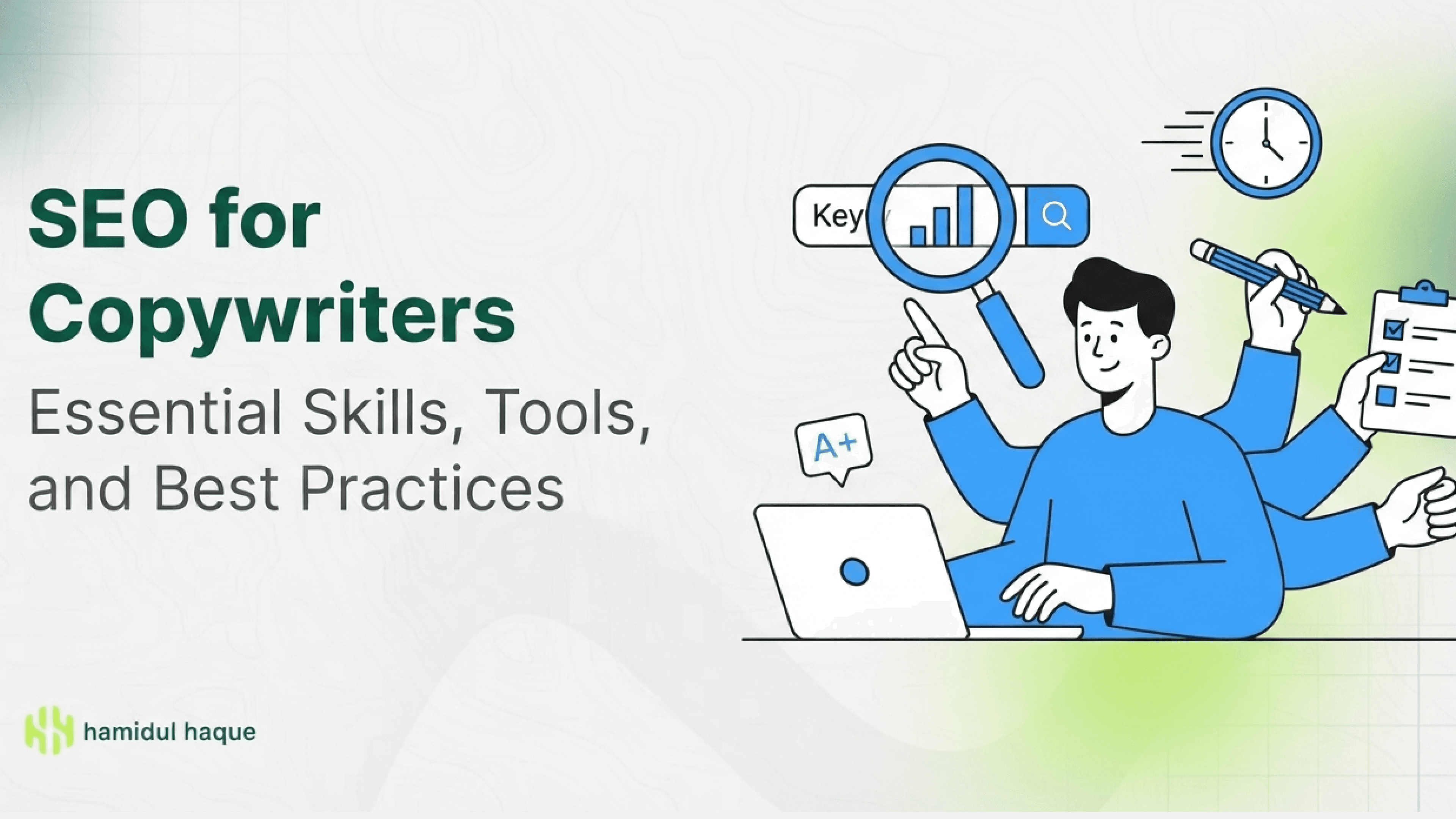
In this guide, I will show you how I use SEO to write content that attracts readers, earns rankings, and still drives action.
Why Copywriters Need SEO
SEO helps strong copy reach the people actively searching for relevant products, services, or information. According to a 2013 Chitika Insights study, the first organic Google result received 32.5% of search traffic, compared with 17.6% for the second result and 11.4% for the third.
Although these figures are dated, they clearly show how ranking position can affect visibility. Copywriters who understand SEO can target relevant keywords, match search intent, organise content effectively, and write stronger headlines.
I use these principles to create copy that is easier to discover and more useful to readers. This gives content a better chance of attracting qualified traffic, generating leads, and supporting conversions.
Which SEO Skills Are Relevant to Copywriting?
Copywriters do not need to master every part of SEO. The priority is learning the skills that influence content quality, relevance, visibility, and conversions. Technical implementation should usually remain with an SEO specialist or web developer.
What You Have to Learn
Keyword Research
You need to know how to find a primary keyword, supporting keywords, and relevant questions. Keyword research helps you understand how your audience describes its problems.
Example: For the primary keyword “SEO for copywriters,” supporting terms may include “SEO writing skills,” “keyword research for copywriters,” and “on-page SEO for writers.”
Search Intent
Search intent tells you what the user expects to find. You should identify whether the keyword has informational, commercial, transactional, or navigational intent.
Example: Someone searching for “SEO for copywriters” is probably looking for practical education. The page should teach SEO skills rather than aggressively promote a copywriting service.
Content Structure
You need to organise content using a clear H1, relevant H2s, supporting H3s, short paragraphs, and useful examples. Each section should answer a specific reader question.
Example: A guide about SEO copywriting could move from keyword research to search intent, content structure, on-page optimisation, and performance measurement.
On-Page SEO
Copywriters should understand how to optimise title tags, meta descriptions, headings, URL suggestions, internal links, anchor text, and image alt text.
Example: Instead of writing a vague title such as “Improve Your Writing,” use a specific title such as “SEO for Copywriters: Skills, Examples, and Best Practices.”
Natural Keyword Placement
You should know where keywords can appear naturally, including the title, introduction, headings, body copy, and conclusion. Repetition should never damage readability.
Example: The keyword “SEO for copywriters” can appear in the title and introduction, while related phrases can be used throughout the remaining sections.
Less Priority to Learn
Basic Technical SEO
It is useful to understand concepts such as crawling, indexing, page speed, mobile usability, and canonical tags. However, copywriters usually do not need to implement them.
This knowledge helps you identify when a content problem may actually be a technical issue.
Schema Markup
You should understand that structured data helps search engines interpret certain page elements. Learning how to write or deploy complex schema code is less important for most copywriters.
Backlink Strategy
Copywriters should understand why authoritative backlinks can support visibility. However, link prospecting, outreach campaigns, and backlink audits are usually separate SEO responsibilities.
SEO Analytics
You should know how to review basic metrics such as impressions, clicks, rankings, organic traffic, and conversions. Advanced data analysis is helpful, but it is not essential when you are starting.
Not Your Concern
Server Configuration
Managing hosting environments, server response codes, redirects, caching, and security settings is normally the responsibility of a developer or technical SEO specialist.
Website Development
Copywriters are not expected to build website templates, modify complex code, or repair rendering problems. Your role is to provide optimised content and clear implementation instructions.
Advanced Site Audits
Large-scale crawl analysis, JavaScript SEO, log-file analysis, and indexation troubleshooting require specialist tools and technical knowledge. These areas are outside the normal scope of copywriting.
Core Web Vitals Implementation
You should understand that page performance can affect user experience. However, fixing loading speed, layout shifts, or interaction delays should be handled by developers.
The division is simple: copywriters should understand how SEO affects content, but they do not need to become developers. Your main responsibility is producing relevant, well-structured copy that matches search intent and encourages readers to act.
Core SEO Skills Every Copywriter Needs
Copywriters need practical SEO skills that improve content relevance, visibility, and usefulness. The goal is not to write for algorithms. It is to understand what readers search for and create content that answers their needs clearly.
How to Research and Use Keywords
Keyword research reveals the language your audience uses when searching for information, products, or services. I begin with one broad seed keyword, then identify more specific terms, related questions, and supporting topics.
For example, the seed keyword “SEO for copywriters” could lead to related keywords such as:
- SEO skills for copywriters
- Keyword research for copywriters
- How to write SEO copy
- SEO content structure
- On-page SEO for writers
I then select one primary keyword that represents the page’s main topic. Related keywords help me cover the subject in greater depth, but I do not force every phrase into the copy.
The primary keyword can appear naturally in the:
- Page title
- Introduction
- One relevant heading
- Main body
- Meta title and description
For example, instead of repeating “SEO for copywriters” in every paragraph, I would use natural variations such as “SEO copywriting skills,” “optimised content,” and “keyword research.”
Keyword placement should never make a sentence awkward. If a keyword does not fit grammatically, I rewrite it, use a close variation, or leave it out. Clear and useful writing takes priority over exact-match repetition.
How to Understand Search Intent
Search intent is the reason behind a search. Before writing, I check what the reader expects to find and what type of page currently satisfies that expectation.
The four common types of search intent are:
Informational Intent
The user wants to learn something.
Example: “How to write SEO copy”
This keyword needs a guide, tutorial, or step-by-step explanation.
Commercial Intent
The user is comparing options before making a decision.
Example: “Best SEO tools for copywriters”
This keyword needs comparisons, benefits, limitations, and recommendations.
Transactional Intent
The user is ready to take action.
Example: “Hire an SEO copywriter”
This keyword needs a service page with proof, pricing information, benefits, and a clear call to action.
Navigational Intent
The user wants to reach a specific website or page.
Example: “Google Search Console login”
This keyword usually does not suit a general blog post.
I review the first-page results before creating an outline. If most results are guides, I write an educational article. If service pages dominate, I avoid treating the keyword as purely informational. Matching the wrong intent can prevent good content from ranking because it does not deliver what searchers expect.
How to Structure Content for Rankings
A clear content structure helps readers find information quickly and helps search engines understand the relationship between topics.
I begin with one H1 that describes the main subject. I then use H2 headings for major sections and H3 or H4 headings for supporting points.
A practical structure looks like this:
- H1: SEO for Copywriters
- H2: Core SEO Skills Every Copywriter Needs
- H3: How to Research and Use Keywords
- H3: How to Understand Search Intent
- H3: How to Structure Content for Rankings
Each section should answer one clear question. I also place the most important information near the beginning instead of delaying the answer with unnecessary background.
To improve structure, I use:
- Descriptive headings
- Short paragraphs
- Relevant examples
- Numbered steps for processes
- Bullet points for quick comparisons
- Internal links to related pages
- A logical progression between sections
The goal is not to add headings only for SEO. Every heading should help the reader understand what comes next and locate the information they need.
How to Optimise Copy Without Making It Sound Unnatural
SEO optimisation should improve clarity, relevance, and structure. It should not make the copy repetitive or difficult to read. I treat keywords as topic signals, not phrases that must appear in every paragraph.
Use Keywords Where They Fit Naturally
I place the primary keyword in important areas such as the title, introduction, one relevant heading, and body copy. I then use related terms and natural variations throughout the page.
Unnatural example:
SEO for copywriters helps copywriters learn SEO for copywriters and improve SEO copywriting results.
Natural example:
Learning SEO helps copywriters create content that attracts search traffic while remaining persuasive and easy to read.
Both sentences address the same topic, but the second one sounds more credible and useful.
Write for Meaning, Not Keyword Density
There is no universal keyword-density percentage that guarantees rankings. Repeating a phrase simply to reach a target can weaken the content.
I focus on answering the topic completely. When the explanation is relevant, important terms usually appear naturally. I may use variations such as:
- SEO copywriting
- Search-optimised content
- Keyword research
- Search intent
- On-page optimisation
These variations improve readability while keeping the content focused on the main subject.
Prioritise Clear Sentences
I avoid inserting keywords into sentences where they create awkward grammar. If an exact keyword does not fit, I rewrite the sentence or use a close variation.
For example, the keyword “SEO copywriter London” may be useful for research, but this sentence sounds unnatural:
I am an experienced SEO copywriter London businesses can hire.
A better version is:
I provide SEO copywriting services for businesses in London.
The second version keeps the meaning while sounding professional.
Keep Persuasive Elements Relevant
SEO copy still needs to guide readers towards an action. However, calls to action, product benefits, and promotional claims should match the reader’s stage of awareness.
An informational article should educate first. A service page can be more direct because the reader may already be considering a purchase.
For example, a blog post might end with:
Use this checklist to review your next SEO article before publishing.
A service page could use:
Request an SEO content brief for your next project.
Edit for Readers After Optimising
After adding keywords and on-page elements, I read the copy without thinking about SEO. I check whether the sentences sound natural, whether ideas repeat, and whether each section provides useful information.
I remove any keyword that weakens the sentence. Search visibility matters, but content that sounds robotic can reduce trust, engagement, and conversions.
How Much Technical SEO Does a Copywriter Need to Know?
A copywriter does not need to become a developer or technical SEO specialist. However, basic technical knowledge helps you understand whether content can be discovered, indexed, and displayed correctly in search results.
I focus on technical concepts that directly affect my writing. When a problem requires coding, server access, or advanced analysis, I pass it to the appropriate specialist.
Technical SEO Basics You Should Understand
Crawling and Indexing
Search engines must discover and index a page before it can appear in search results. Copywriters should understand this process because excellent content cannot rank if search engines cannot access it.
For example, a page may fail to appear in Google because it has a noindex tag, is blocked by website settings, or is not linked from other pages. You do not need to fix these problems yourself, but you should recognise that the issue may not be the content.
URL Structure
A URL should be clear, concise, and relevant to the page topic.
Weak URL:
example.com/blog/post-17384
Better URL:
example.com/seo-for-copywriters
I normally recommend a short URL containing the main topic. I avoid unnecessary numbers, dates, and repeated words unless they serve a clear purpose.
Internal Linking
Internal links connect related pages on the same website. They help readers find more information and help search engines understand the website’s structure.
For example, an article about SEO for copywriters could link to separate guides about keyword research, content briefs, or title tags.
I use descriptive anchor text such as “keyword research guide” instead of vague wording such as “click here.”
Redirects and Broken Links
A redirect sends users and search engines from one URL to another. Copywriters should understand redirects when updating, combining, or removing content.
For example, if two weak articles are merged into one stronger guide, the old URLs should normally redirect to the new page. Otherwise, visitors may reach an error page and existing link value may be lost.
Canonical Tags
A canonical tag identifies the preferred version of a page when similar or duplicate URLs exist. Copywriters do not usually implement canonical tags, but they should understand why duplicate content can create confusion.
This may happen when the same product description appears across several pages or when one article is accessible through multiple URLs.
Technical Issues You Should Be Able to Flag
You should be able to identify potential problems such as:
- A page that is missing from search results
- Duplicate or nearly identical content
- Broken internal links
- Incorrect heading structure
- Missing title tags or meta descriptions
- Images without descriptive alt text
- Slow or difficult mobile pages
- Important pages with no internal links
Your responsibility is to report these issues clearly. You do not need to repair every problem.
Technical Tasks That Usually Belong to Specialists
Copywriters are generally not responsible for:
- Server configuration
- Website migrations
- Log-file analysis
- JavaScript rendering problems
- XML sitemap configuration
- Robots.txt management
- Advanced structured data implementation
- Core Web Vitals fixes
- Crawl-budget analysis
- Complex redirect mapping
Learning these areas can be useful if you want to expand into technical SEO, but they are not essential for producing strong SEO copy.
The practical rule is simple: understand enough technical SEO to protect your content and communicate with developers. Spend most of your learning time on keyword research, search intent, content structure, on-page optimisation, and persuasive writing.
Common SEO Mistakes Copywriters Should Avoid
SEO copywriting is not just about adding keywords. Poor research, weak structure, and unnecessary optimisation can reduce both rankings and conversions. I review every draft for the following mistakes before publishing.
Targeting the Wrong Search Intent
A well-written page can still perform poorly when it does not match what searchers expect.
For example, someone searching “how to write SEO copy” wants educational content. Sending them to a service page with little practical guidance does not satisfy that intent.
I check the current search results before writing to confirm whether Google favours:
- Guides
- Service pages
- Product pages
- Comparison articles
- Videos
- Tools
The content format should match the dominant intent unless there is a strong reason to take a different approach.
Choosing Keywords Only by Search Volume
High search volume does not automatically make a keyword valuable. Broad keywords are often competitive, unclear, and less likely to attract qualified readers.
For example, “copywriting” may receive more searches than “SEO copywriting for SaaS companies,” but the second keyword has a clearer audience and purpose.
I consider:
- Relevance to the business
- Search intent
- Ranking difficulty
- Conversion potential
- Topic suitability
A smaller, highly relevant keyword can produce better business results than a broad term with higher traffic.
Forcing Exact-Match Keywords
Exact keywords can sound awkward when inserted without considering grammar.
Forced example:
Our SEO copywriter Manchester service helps companies grow.
Natural example:
Our Manchester SEO copywriting service helps companies attract qualified search traffic.
I prioritise meaning and readability. Search engines can understand close variations, related terms, and natural sentence structures.
Repeating the Same Information
Some writers increase word count by explaining the same point several times. This makes the article longer without making it more useful.
I give each section a specific purpose. Before keeping a paragraph, I ask whether it adds:
- A new explanation
- A practical example
- A useful process
- Supporting evidence
- A clear recommendation
If it only repeats an earlier point, I remove it.
Writing Weak Headings
Generic headings make content difficult to scan and provide little context.
Weak heading:
Important Tips
Stronger heading:
How to Place Keywords Without Reducing Readability
The stronger version tells readers exactly what the section covers. I use headings to organise information, not simply to divide long blocks of text.
Ignoring Internal Links
Publishing an article without internal links can leave it disconnected from the rest of the website.
I link to relevant pages when they help readers continue their research. For example, an SEO copywriting guide could link to separate resources about:
- Keyword research
- Content briefs
- Landing-page copy
- Title tags
- Content audits
The anchor text should describe the destination clearly rather than using phrases such as “click here.”
Overpromising in Titles and Introductions
A title should attract attention, but it must accurately represent the content.
For example, a headline such as “Rank Number One on Google in Seven Days” makes an unrealistic promise. It may increase clicks temporarily, but it damages credibility when the article cannot support the claim.
I write specific titles that communicate a realistic benefit, such as:
SEO for Copywriters: How to Research Keywords and Structure Content
Treating Meta Descriptions as Ranking Guarantees
A meta description can influence how a search result appears and may encourage more clicks, but adding a keyword to it does not guarantee a higher ranking.
I use the meta description to:
- Summarise the page accurately
- Highlight the main benefit
- Match the searcher’s intent
- Encourage a relevant click
It should support the page, not make exaggerated promises.
Publishing Without Editing
SEO tools can identify missing terms or structural issues, but they cannot fully judge clarity, accuracy, tone, or persuasion.
After optimisation, I edit the draft for:
- Awkward keyword placement
- Unsupported claims
- Repeated ideas
- Long sentences
- Weak transitions
- Unclear calls to action
- Grammar and spelling errors
The final version should sound like useful, professional copy, not a document written to satisfy an optimisation score.
SEO Tools Copywriters Can Use
SEO tools can speed up research, reveal content gaps, and measure performance. However, they should support judgement, not replace it. I use tools to collect data, then decide what matters based on the audience, search intent, and business goal.
Keyword Research Tools
Keyword research tools help identify search terms, related questions, estimated demand, and competition.
I use them to find:
- A relevant primary keyword
- Supporting keywords
- Long-tail variations
- Common audience questions
- Related subtopics
For example, research around “SEO for copywriters” may reveal supporting topics such as keyword placement, search intent, content structure, and technical SEO basics.
Search volume should not be the only deciding factor. A lower-volume keyword with clear intent may attract more qualified visitors than a broad, highly competitive term.
Search Results Analysis
The search results page is one of the most useful research tools available. I review the top-ranking pages to understand what type of content searchers expect.
I check:
- The dominant content format
- Common headings and subtopics
- The level of detail provided
- Featured snippets and related questions
- Gaps in existing content
For example, if most results for a keyword are detailed guides, publishing a short promotional page will probably not satisfy the same intent.
The goal is not to copy competing pages. I use them to understand expectations and identify opportunities to provide clearer explanations, stronger examples, or more practical advice.
Content Optimisation Tools
Content optimisation tools compare a draft with pages that already rank for the target topic. They may suggest related terms, missing subtopics, content length, or structural improvements.
I use these suggestions as references rather than fixed instructions. Adding every recommended term can make a draft repetitive and unnatural.
A high optimisation score does not guarantee strong content. The page must still be accurate, readable, useful, and aligned with search intent.
Readability and Editing Tools
Editing tools can identify grammar mistakes, long sentences, repeated words, passive phrasing, and readability problems.
They are useful during the final editing stage, but they cannot always understand brand voice, technical context, or persuasive intent.
I review every suggestion manually. A sentence should not be changed simply because a tool flags it. The edit must improve clarity or accuracy.
Performance Tracking Tools
Performance tools show what happens after content is published. I use them to review:
- Search impressions
- Organic clicks
- Average ranking position
- Click-through rate
- Website traffic
- Engagement
- Leads and conversions
These metrics help identify whether a page needs a stronger title, better intent alignment, additional information, or improved calls to action.
Use Tools Without Depending on Them
SEO tools provide estimates and recommendations, not guaranteed answers. Different platforms may report different keyword volumes, difficulty scores, or content suggestions.
I use tool data to support three decisions:
- Is the keyword relevant to the audience?
- Can the content satisfy the search intent?
- Can the page contribute to a meaningful business goal?
A tool cannot replace clear thinking, subject knowledge, accurate research, or strong editing.
How to Measure SEO Copywriting Performance
SEO copy should be measured by more than rankings. A page can rank well and still fail to generate useful traffic, leads, or sales. I track both search visibility and business outcomes to understand whether the content is actually working.
Search Impressions
Impressions show how often a page appears in Google search results. An increase in impressions usually means the page is gaining visibility for more searches.
However, impressions alone do not prove success. A page may appear frequently but receive few clicks if its title does not match the search intent or attract attention.
Organic Clicks
Organic clicks show how many people visit the page from unpaid search results. I compare clicks with impressions to understand whether the search listing is encouraging users to visit.
For example, a page may receive 10,000 impressions but only 100 clicks. That may indicate a weak title, an unclear meta description, poor ranking positions, or a mismatch between the keyword and the content.
Click-Through Rate
Click-through rate measures the percentage of impressions that result in clicks.
A low click-through rate can suggest that the title is too vague, the page does not appear relevant, or competing results offer a stronger benefit.
I test clearer titles instead of using clickbait.
Weak title:
Important SEO Writing Tips
Stronger title:
SEO for Copywriters: How to Research Keywords and Structure Content
The stronger title explains exactly what the reader will learn.
Keyword Rankings
Rankings show where a page appears for specific search terms. I track the primary keyword, but I also review related keywords because one article can rank for several relevant searches.
Ranking improvements are useful, but position alone should not be treated as the final goal. A lower-volume keyword that brings qualified leads may be more valuable than a broad keyword that produces irrelevant traffic.
Organic Traffic
Organic traffic shows how many visits come from unpaid search results. I compare performance over several weeks or months because SEO results often develop gradually.
I also check whether traffic reaches the correct page. A sudden increase in visitors has limited value when those visitors are searching for something unrelated to the offer.
Engagement
Engagement helps reveal whether visitors find the content useful after clicking.
I review metrics such as:
- Average engagement time
- Scroll depth
- Internal link clicks
- Downloads
- Video plays
- Contact form interactions
These signals need context. A short visit is not always negative. A reader may find the answer quickly and leave satisfied.
Leads and Conversions
Conversions show whether the content supports a meaningful business action.
Depending on the page, a conversion may include:
- Submitting a contact form
- Booking a consultation
- Joining an email list
- Downloading a resource
- Starting a free trial
- Purchasing a product
For example, an article may receive less traffic than a competitor but generate more enquiries because it attracts a more relevant audience and includes a stronger call to action.
Assisted Conversions
Some SEO content influences a purchase without producing the final conversion directly. A reader may discover the brand through a blog post, return later, and then complete an enquiry through a service page.
This is why I do not judge every informational article only by direct sales. Its role may be to build awareness, answer objections, and guide readers towards commercial pages.
Content Updates
Performance data can show when a page needs improvement.
I may update a page when:
- Impressions rise but clicks remain low
- Rankings stop improving
- Traffic declines
- Information becomes outdated
- Competitors cover the topic more thoroughly
- Visitors do not reach the call to action
- The page attracts irrelevant searches
I use this information to improve the title, expand weak sections, clarify search intent, add internal links, or strengthen the call to action.
The most useful measurement combines visibility, relevance, engagement, and conversions. Rankings matter, but the real value of SEO copy is its ability to attract the right readers and move them towards a useful action.
Final Word
SEO for copywriters is not about forcing keywords into every paragraph. It is about understanding what people search for, why they search for it, and how to provide the right information clearly.
During my six years of copywriting, I have found that the most effective approach is to combine keyword research, search intent, logical structure, and persuasive writing. I use SEO to improve visibility, but I never allow optimisation to weaken readability or credibility.
A copywriter does not need to become a technical SEO expert. Focus first on the skills that directly affect content. Learn how to choose relevant keywords, satisfy search intent, structure pages, write useful copy, and measure results. These skills will help you create content that attracts the right readers and supports meaningful business goals.


 Hamidul Haque
 Aug 23, 2026