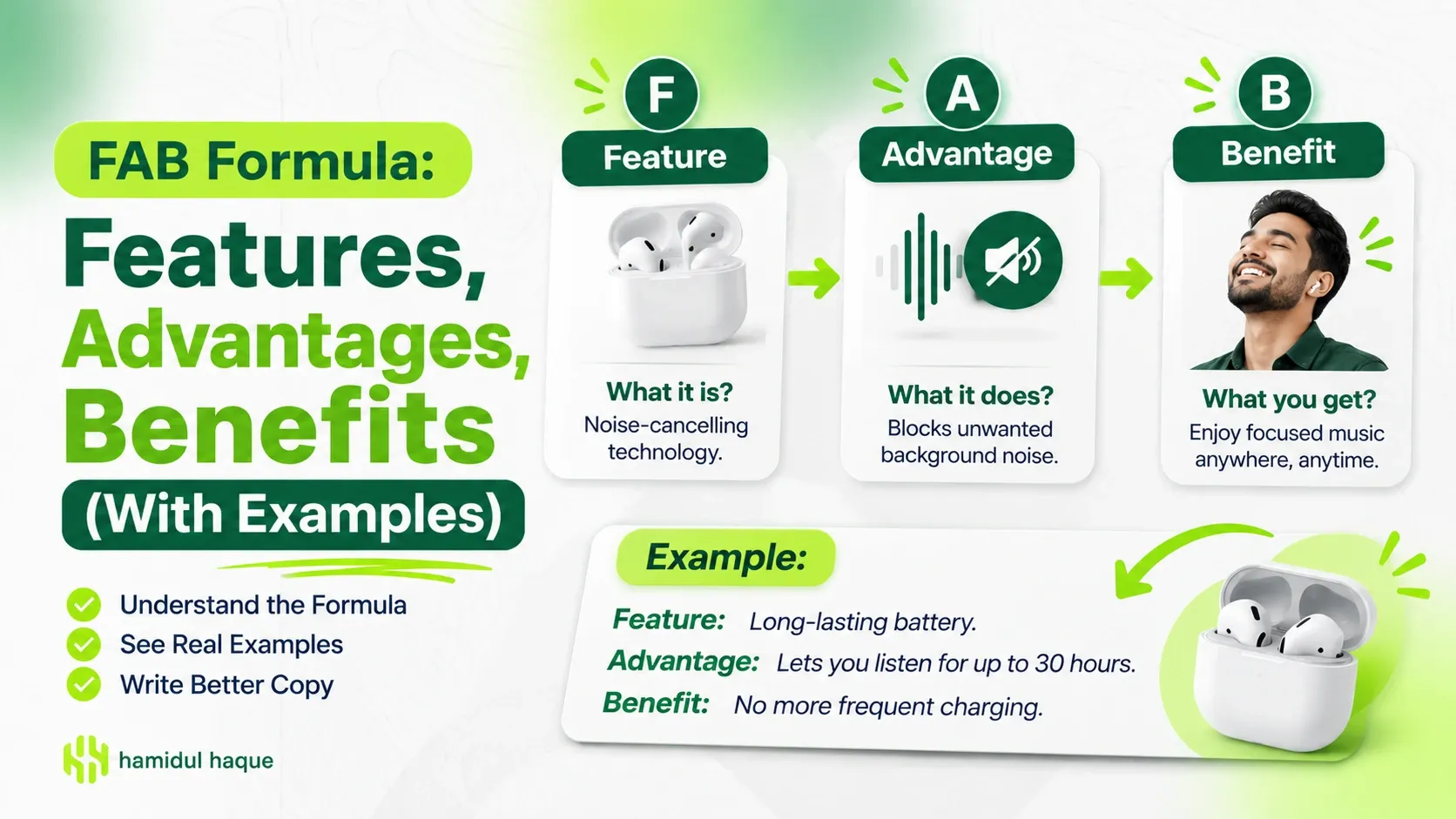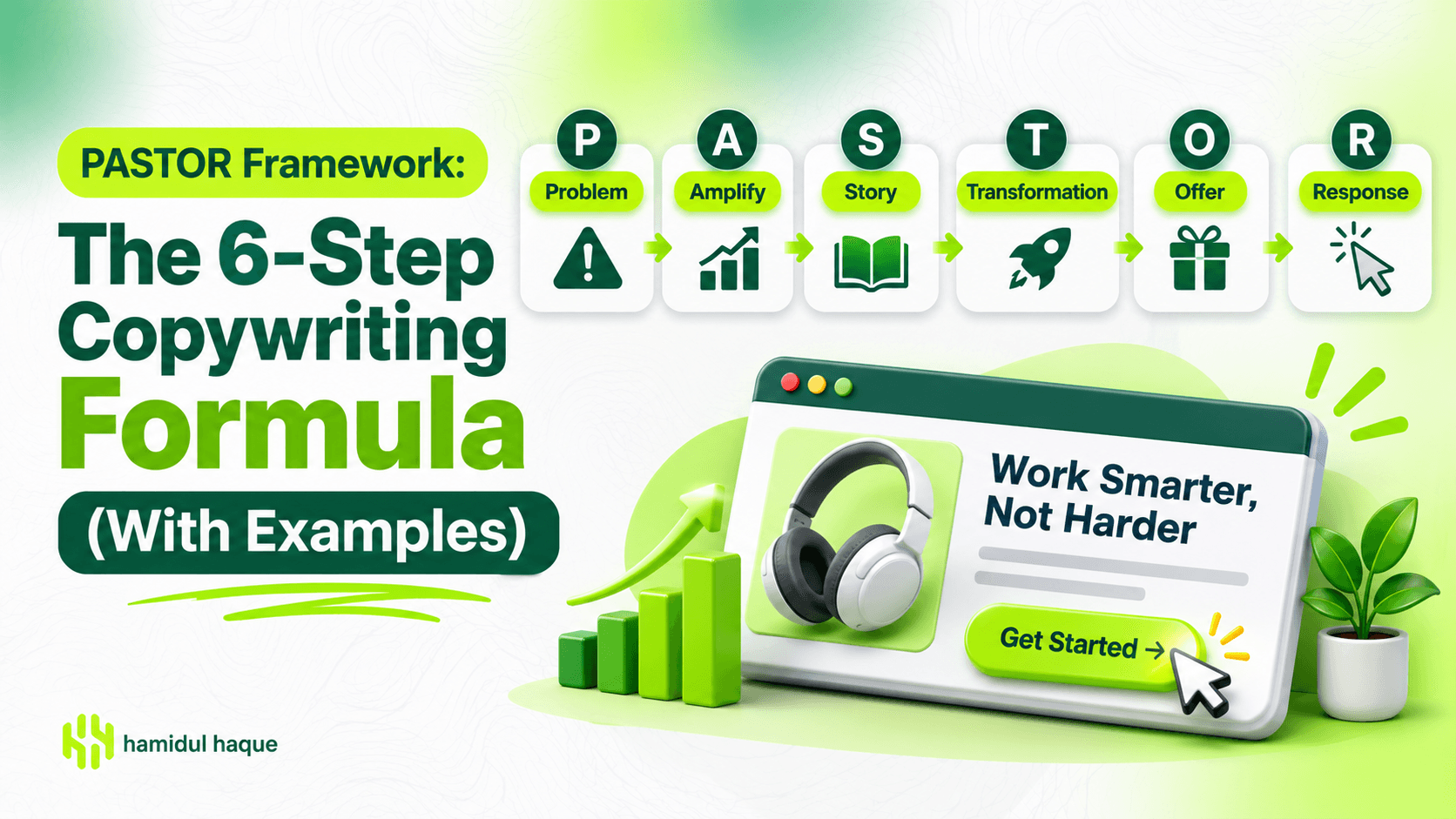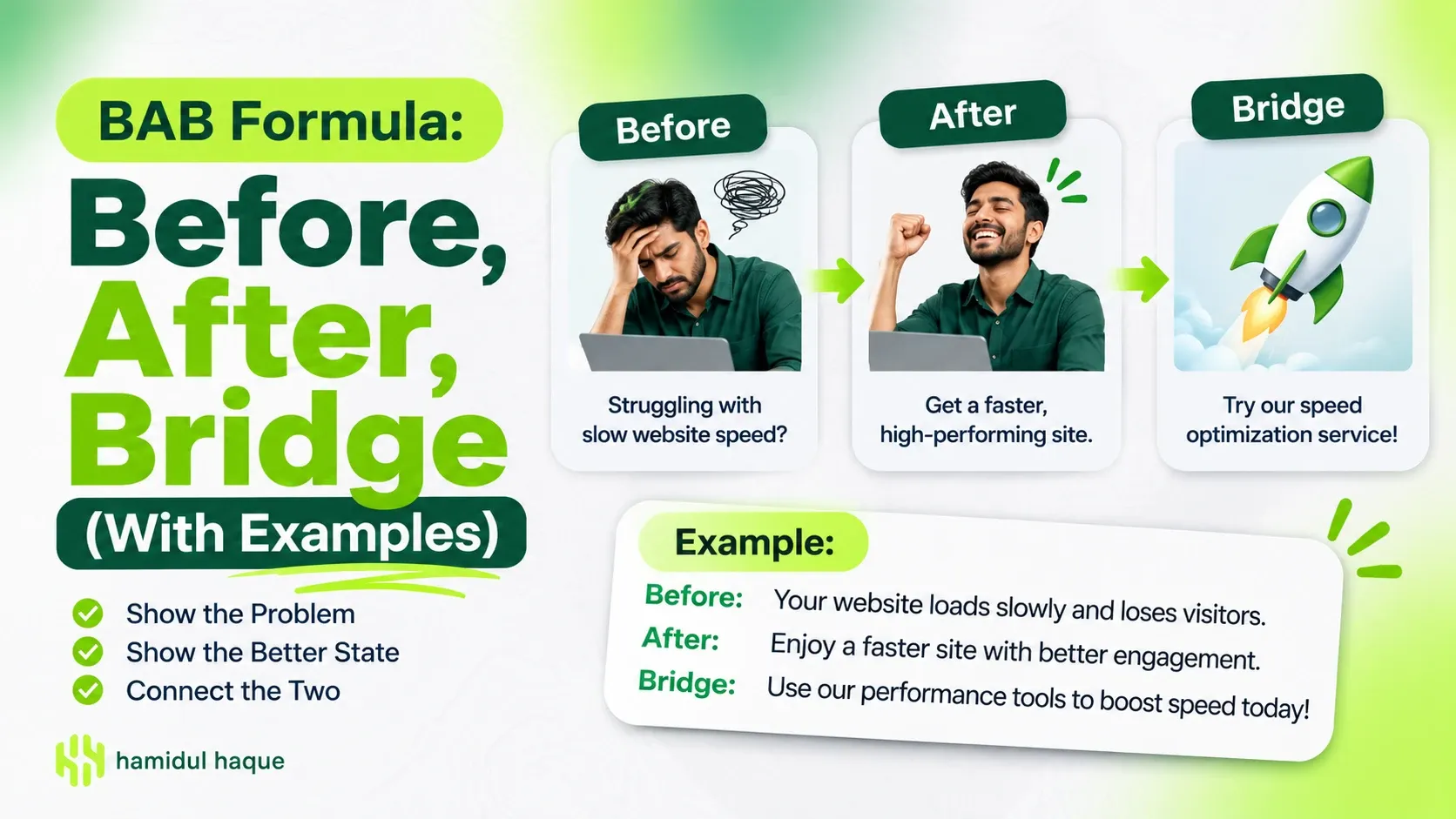
Most people don't buy a product. They buy the version of their life where the problem is gone. The BAB formula turns that idea into a simple structure: show the reader where they are now, show them where they could be, then show them how to get there.
This guide explains the BAB formula (Before, After, Bridge) step by step, with 7 examples for landing pages, cold emails, ads, product pages and social posts. You'll also get a free fill-in template as a Google Sheet, so you can draft your next BAB piece in minutes.
What Is the BAB Formula?
The BAB formula is a copywriting framework with three parts: Before, After and Bridge. You describe the reader's current situation, paint a picture of what changes once the problem is solved, then present your product or service as the way to get from one to the other.
It's one of the classic structures in my list of copywriting formulas, and it's popular because it's short. You can fit a full BAB message into a tweet, a three-line email or a single hero section.
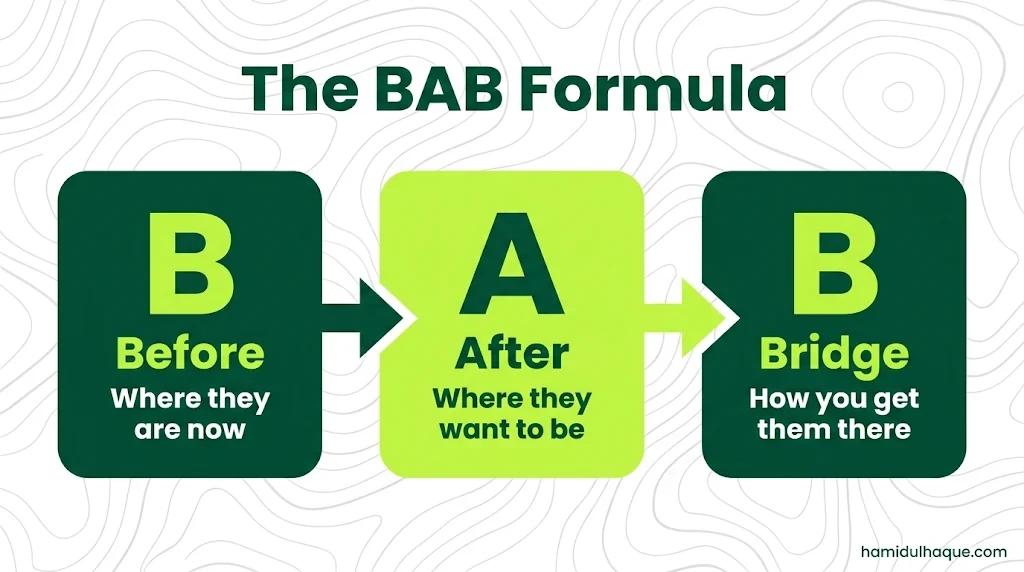
| Step | Question it answers | Its job |
|---|---|---|
| Before | Where is the reader now? | Name the current situation in their words |
| After | Where do they want to be? | Make the better outcome specific and easy to picture |
| Bridge | How do they get there? | Present your offer as the path and ask for one action |
Why the BAB Formula Works
BAB works because it shows a change instead of listing features. When you describe the reader's day before and after, they don't have to work out what your product means for them. You've already done the translation.
Campaign Monitor explains the formula in terms of a basic motivation: people move away from pain and toward pleasure. The Before reminds them of the pain, the After shows the pleasure, and the Bridge makes the move feel possible.
It also suits the way people read online. Research from Nielsen Norman Group found that 79% of test users scanned new pages rather than reading word by word. A clear before-and-after contrast is easy to grasp even when someone only skims.
The 3 Steps of BAB, Explained
1. Before: Describe Where the Reader Is Now
Start with a situation your reader recognises immediately. The more it sounds like their own thoughts, the faster they'll keep reading. Pull phrases from reviews, sales calls and support tickets rather than inventing them.
- Weak: "Managing finances is hard."
- Strong: "It's the 28th, and you're still matching receipts to bank lines at 11 p.m."
You don't need to dramatise the problem. That's the main difference between BAB and the PAS formula, where the Agitate step deliberately turns up the pain.
2. After: Show What Changes
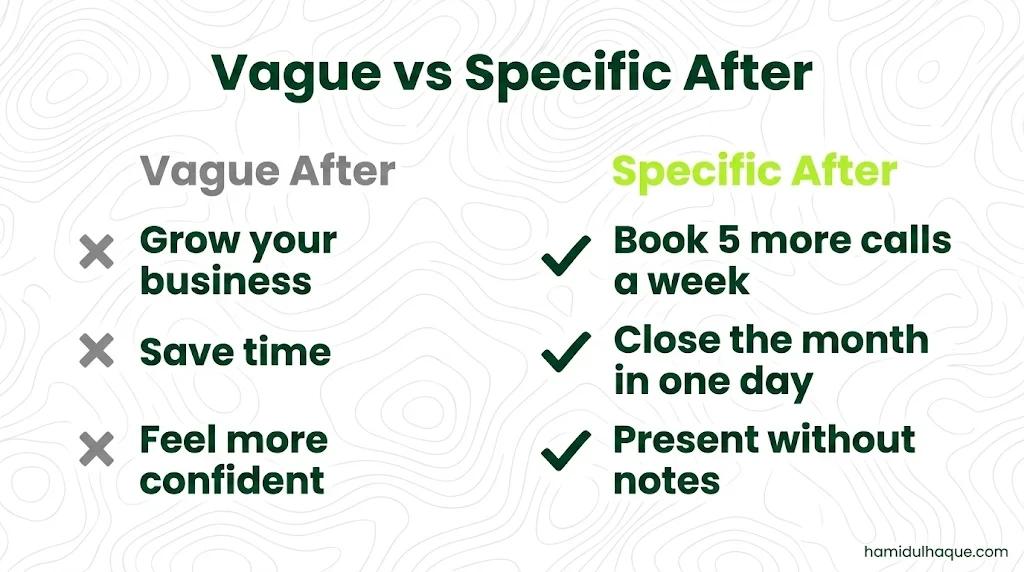
The After is the heart of the formula. Describe the result the reader wants, in concrete terms they can picture. Avoid vague benefits like "save time" or "grow your business." Say what the saved time looks like, or what growth means this month.
- Weak: "Get your finances under control."
- Strong: "Picture closing the month in one afternoon, with every receipt already matched."
Keep it believable. If the After sounds too good to be true, the reader stops trusting the Bridge.
3. Bridge: Present Your Offer as the Path
The Bridge connects the two states. Name your product or service, explain briefly how it creates the After, and end with one clear next step. This is where features belong, but only the ones that make the change possible. The FAB formula is useful here for turning each feature into a benefit.
- Weak: "Our software has bank sync and AI categorisation."
- Strong: "Our app syncs your bank feed and matches receipts as they arrive. Start your free trial."
Finish with a specific call to action. If you need ideas, my list of call to action examples has 25 button texts to adapt.
7 BAB Formula Examples
The examples below use invented products so you can focus on the structure. Swap in your own audience, offer and proof.
BAB Landing Page Example
- Before: "Your team spends Monday mornings chasing updates across email, chat and spreadsheets."
- After: "Imagine opening one board and seeing every task, owner and deadline at a glance."
- Bridge: "TaskFlow pulls your projects into a single shared board. Try it free for 14 days."
On a landing page, the Before and After can share the hero section, with the Bridge as the subheadline and button.
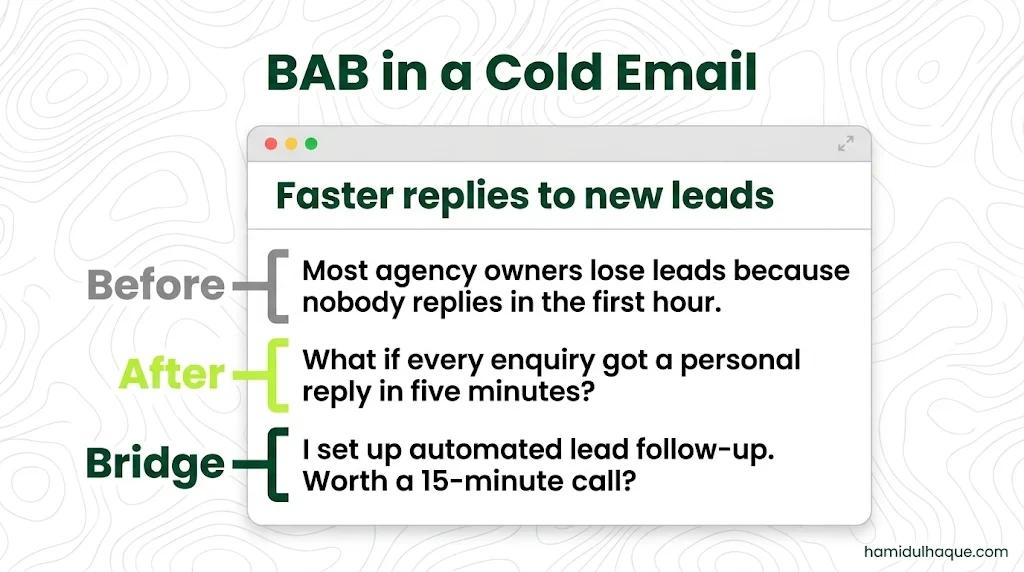
BAB Cold Email Example
- Before: "Most agency owners I speak to lose leads because nobody replies within the first hour."
- After: "What if every new enquiry got a personal reply in five minutes, even at night?"
- Bridge: "I set up automated lead follow-up for agencies like yours. Worth a 15-minute call next week?"
Keep cold emails short. One line for each step is often enough.
BAB LinkedIn or Facebook Ad Example
- Before: "Writing a week of posts takes you a whole Sunday."
- After: "Now picture having every post drafted and scheduled by lunchtime."
- Bridge: "PostPilot turns one idea into a week of posts. Get your first week free."
BAB Product Description Example
- Before: "Cheap chairs leave your lower back aching by 3 p.m."
- After: "Work through the afternoon without shifting in your seat every ten minutes."
- Bridge: "The Arc Chair has adjustable lumbar support and a seat that tilts with you. Order with free 30-day returns."
BAB Social Media Post Example
- Before: "Last year I sent 200 proposals and won 6."
- After: "This year I'm closing one in three."
- Bridge: "The change? I stopped describing my process and started describing the client's result. Here's the template I use."
Personal BAB posts work well because the writer is the proof.
BAB Service Page Example
- Before: "Your website gets traffic, but the enquiry form stays empty."
- After: "Visitors understand your offer in five seconds and know exactly what to do next."
- Bridge: "I rewrite service pages around what your buyers care about. Book a free copy review."
For full service pages, BAB works as the opening section. My website copywriting guide shows how to build the rest of the page.
BAB Headline and Subheadline Example
- Headline (Before + After): "From messy spreadsheets to a budget you actually follow."
- Subheadline (Bridge): "Budgetly sorts your spending automatically and shows you what's left for the month."
The "From X to Y" headline is one of the fastest ways to use BAB in a single line.
Free BAB Template
The template gives you a prompt for each step, the examples from this guide and space to write your own drafts. Make a copy and reuse it for every page, email or ad.
Get the Free BAB Formula Template
A Google Sheet with a prompt for each BAB step, the examples from this guide and space to draft your own. Make a copy and reuse it for every page, email or ad.
Copy the Template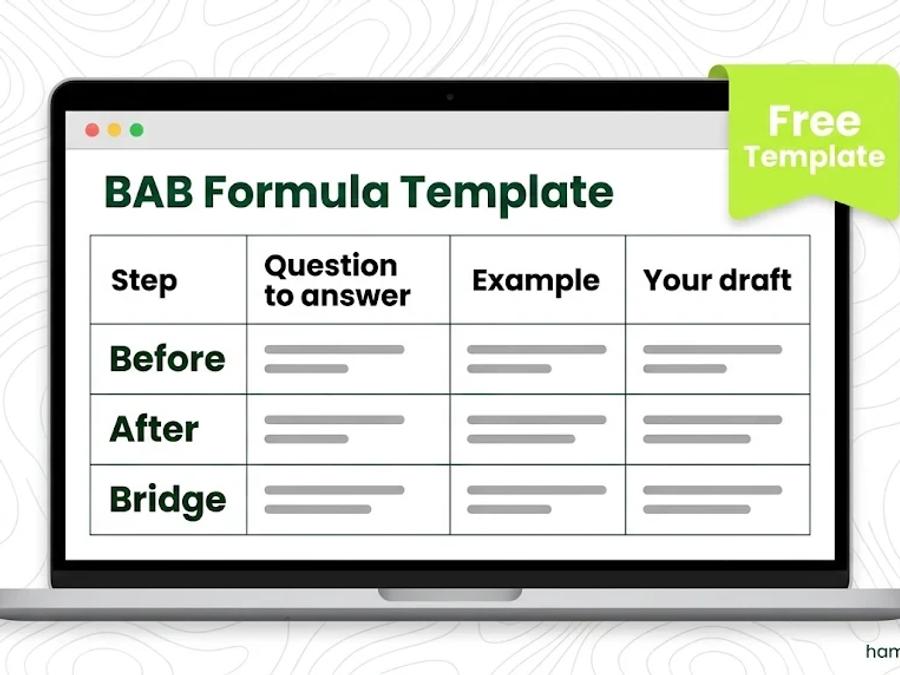
BAB vs PAS vs AIDA
All three formulas guide the reader toward an action, but they start in different places.
| Formula | Starts with | Best for | Watch out for |
|---|---|---|---|
| BAB | The reader's current situation | Showing a clear transformation in short copy | An After that's vague or unbelievable |
| PAS | A specific pain point | Problems readers already feel strongly | Agitating so hard it feels manipulative |
| AIDA | Grabbing attention | Longer pages that need to build desire | Spending too long on the attention hook |
Use BAB when the change your product creates is easy to picture. Use PAS when the reader is already frustrated and needs to feel understood. Use the AIDA formula for longer pages where you need to build interest and desire before asking. You can also combine them: a PAS opening followed by a BAB-style After section is common on sales pages.
When to Use BAB (and When Not To)
BAB fits best when:
- The outcome is visible, such as more clients, a cleaner inbox or faster results.
- You have limited space: ads, subject lines, social posts and hero sections.
- Your audience already knows they have the problem.
It's a weaker fit when the reader doesn't yet know the problem exists, or when the buying decision is complex and needs detailed proof. In those cases, start with education or use a longer structure.
Common BAB Mistakes
- A generic Before. "Running a business is hard" fits everyone, so it moves no one.
- A vague After. "Better results" isn't a picture. Use numbers, moments or visible changes.
- Promising an After you can't deliver. Overstated results damage trust and can mislead buyers.
- A Bridge with no proof. Add a testimonial, result or guarantee near the call to action.
- A missing call to action. The Bridge should end with one clear next step, not a list of options.
- Too much Before. Keep the problem short and spend most of your words on the After and the Bridge.
Final Thoughts
The BAB formula works because it's built around the reader, not the product. Show where they are, show where they could be, and make your offer the obvious way across. Start with the free template, write one BAB version of your next headline or email, and compare it with what you have now.
New to the craft? Start with what copywriting is. If you'd rather have an expert write the page for you, take a look at my SEO copywriting service, or get a conversion audit to see what to fix first.


 Hamidul Haque
 Nov 26, 2026