Most people decide whether to read your page from the headline alone. If it doesn't promise something worth having, they scroll past, and the rest of your copy never gets a chance. The 4 U's formula is a quick way to check a headline before you publish it, instead of guessing.
This guide explains each of the four U's (Useful, Urgent, Unique and Ultra-specific) with weak and strong examples, shows how to score a headline step by step, gives examples for blog posts, landing pages, emails and ads, and includes a free Google Sheet you can use to score your own headlines.
What Is the 4 U's Formula?
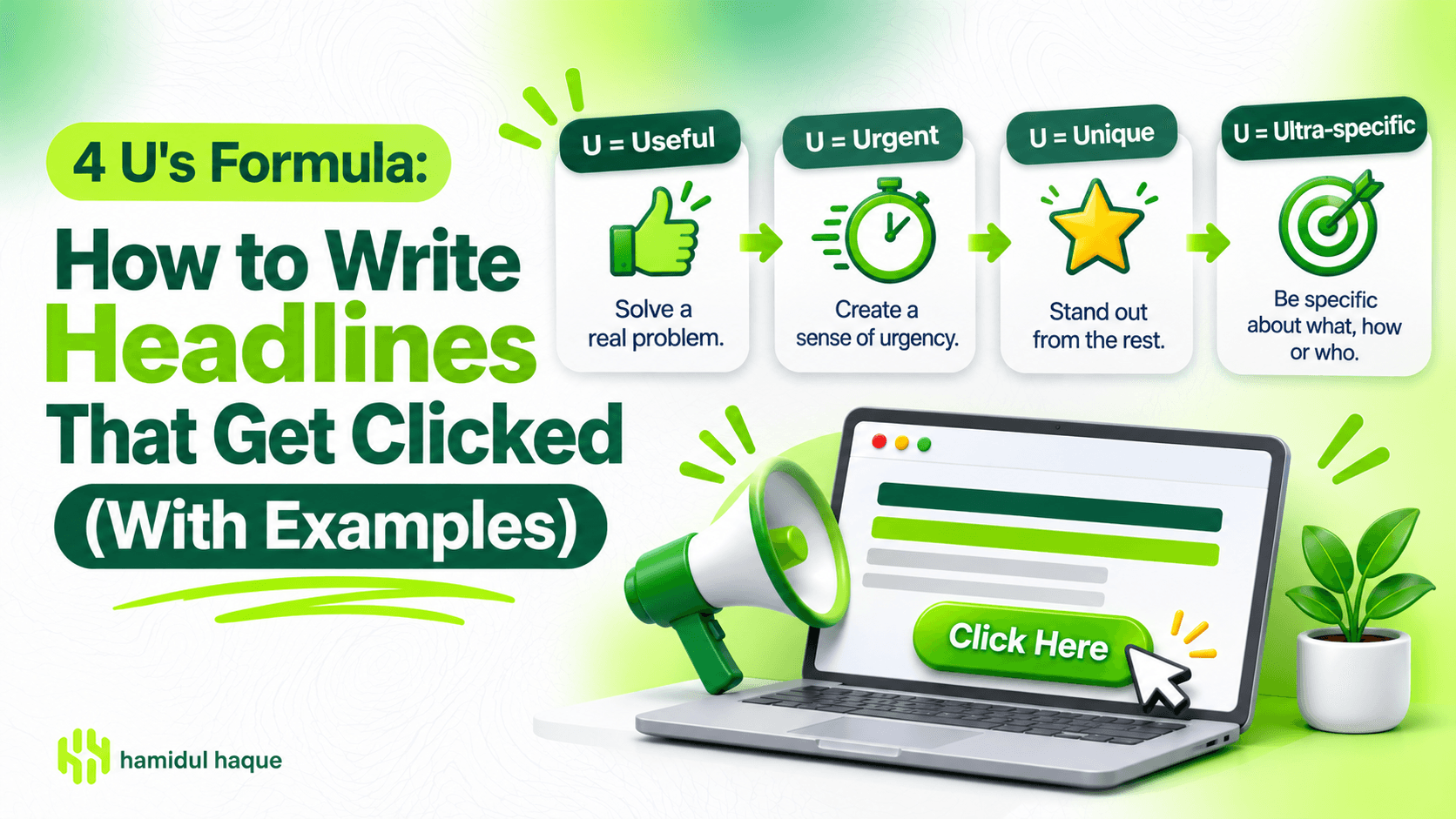
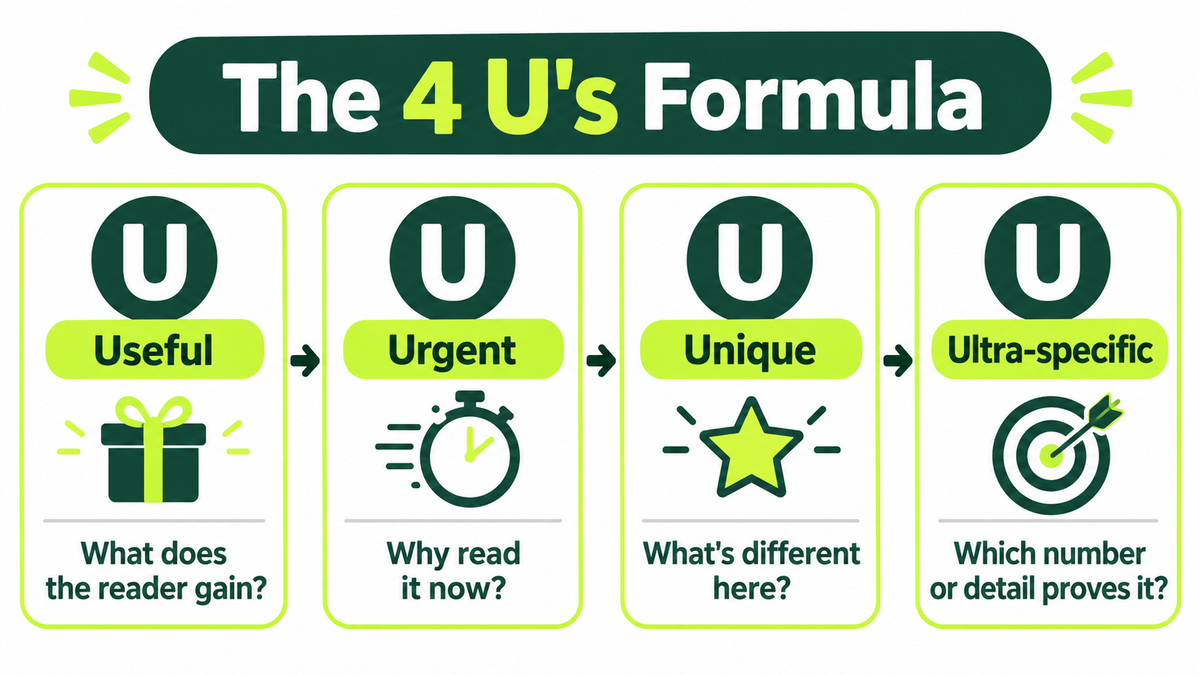
The 4 U's formula is a checklist for writing headlines, subheadings and bullet points. It says strong copy should be Useful, Urgent, Unique and Ultra-specific. You test a headline against each U, give it a point for every one it meets, and rewrite until it scores high enough.
Unlike AIDA or PAS, the 4 U's isn't a structure for a whole page. It's a quality test for short lines of copy: the headline, the subheading, a bullet or an email subject line. That makes it a useful partner to the other copywriting formulas, because you can use one of them to plan the page and the 4 U's to sharpen the lines that people actually read.
| U | Question to ask | What a strong line does |
|---|---|---|
| Useful | What does the reader gain? | Promises a clear benefit or answer |
| Urgent | Why read or act now? | Gives a reason not to put it off |
| Unique | What's different here? | Says something other pages don't |
| Ultra-specific | Which number or detail proves it? | Uses concrete facts, figures or outcomes |
Where the 4 U's Come From
The formula comes from the direct-response world. American Writers & Artists Institute (AWAI) credits it to Michael Masterson and Bill Bonner, who first used it to judge the bullet points in sales letters. AWAI's original review of the 4 U's asks readers to check each bullet for Urgency, Uniqueness, Ultra-specificity and Usefulness, then rewrite the weak ones.
Copywriters later applied the same test to headlines. Unbounce, for example, published a guide to gut-checking landing page headlines with the 4 U's, scoring real headlines from well-known marketers against the four questions. The order of the U's varies from source to source. I start with Useful, because a headline that isn't useful can't be saved by the other three.
The 4 U's Explained (With Examples)
1. Useful
A useful headline promises the reader something of value: an answer, a skill, a saving or a result. Ask, "If I were the reader, what would I get from this?" If you can't answer in a few words, the headline isn't useful yet.
- Weak: "Thoughts on Email Marketing"
- Strong: "How to Write a Welcome Email That Gets Replies"
Usefulness is the U to get right first. The others make a useful promise more compelling, but they can't replace it.
2. Urgent
An urgent headline gives the reader a reason to read or act now rather than later. AWAI describes it as giving the prospect "a reason to act sooner than later." Urgency can come from a real deadline, a season, a change that's happening, or the cost of waiting.
- Weak: "Tips for Filing Your Taxes"
- Strong: "5 Tax Deductions to Claim Before the Filing Deadline"
Urgency is often the hardest U to add honestly, and that's fine. When Unbounce scored a well-known headline that had no urgency, it pointed out that forcing urgency in could backfire by making readers more sceptical. Never invent a deadline or fake scarcity. Made-up countdown timers and false "only 2 left" messages are among the practices the FTC describes in its report on dark patterns.
3. Unique
A unique headline says something the reader hasn't seen many times before. AWAI's version is that it should be different "in at least one small way" from everything else in the category. It doesn't need to be a world first. A fresh angle, an unusual method or your own data is enough.
- Weak: "How to Be More Productive"
- Strong: "The 2-List Method I Use to Plan My Week in 10 Minutes"
A quick way to test uniqueness: search your headline topic and read the top results. If yours could be swapped with any of them, find a different angle.
4. Ultra-specific
An ultra-specific headline replaces vague words with concrete details: numbers, timeframes, names, outcomes. "Grow your list" is vague. "Get your first 1,000 email subscribers" tells the reader exactly what's on offer and makes the promise easier to believe.
- Weak: "Improve Your Website Copy"
- Strong: "Rewrite Your Homepage Hero in 30 Minutes With This 3-Line Template"
Only use numbers you can back up. A specific claim that turns out to be false does more damage than a vague one.
How to Score a Headline With the 4 U's
Scoring keeps you honest. Instead of asking "Is this good?", you ask four yes-or-no questions.
Step 1: Give one point for each U
Score the headline 1 point for each U it clearly meets and 0 for each it misses. If it partly meets a U, give it half a point. Unbounce used half points in its examples. The maximum score is 4.
Step 2: Aim for at least 3
A perfect 4 is the goal, but it isn't always realistic. AWAI's guidance on writing powerful bullets says to aim for 4s, accept some 3s and 2s in a long list, and throw away anything that scores 1. Unbounce suggests aiming for at least three "yes" answers on a headline.
Step 3: Rewrite the weakest U first
Look at which U scored lowest and rewrite to fix that one, then score again. Usually you only need two or three passes.
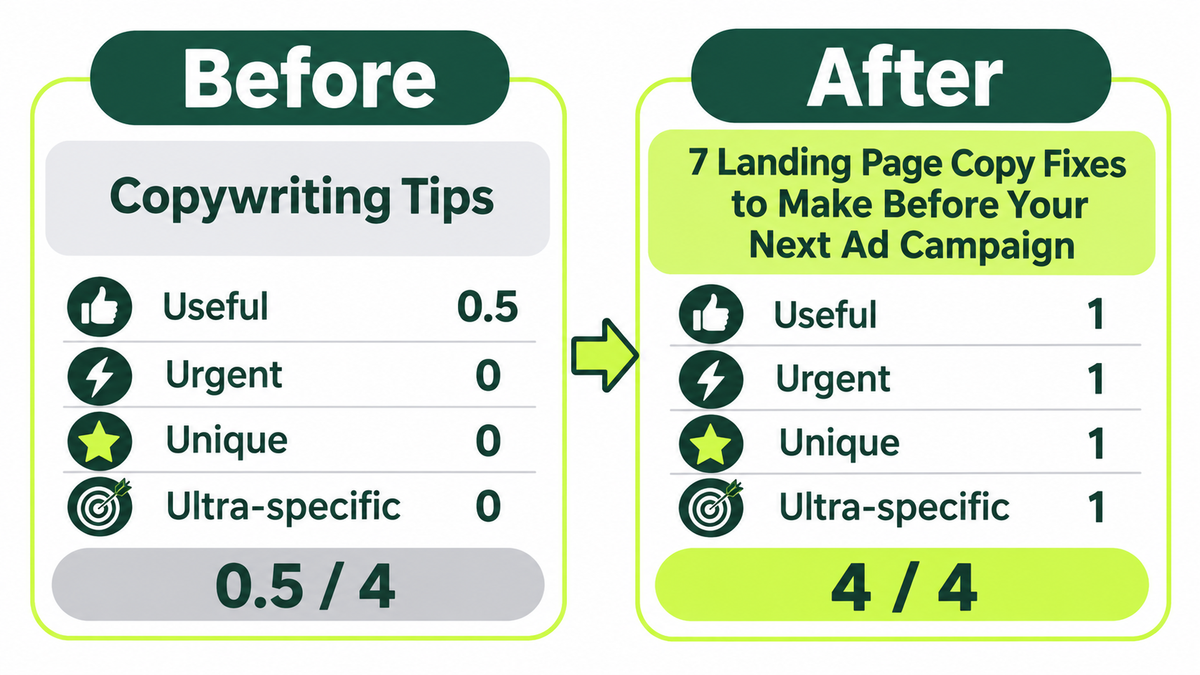
Worked example: from 0.5 to 4
Here's how one blog headline improves over three rewrites:
| Headline | Useful | Urgent | Unique | Ultra-specific | Score |
|---|---|---|---|---|---|
| Copywriting Tips | 0.5 | 0 | 0 | 0 | 0.5 |
| Copywriting Tips for Better Landing Pages | 1 | 0 | 0 | 0 | 1 |
| 7 Copywriting Fixes for Landing Pages That Don't Convert | 1 | 0.5 | 0 | 1 | 2.5 |
| 7 Landing Page Copy Fixes to Make Before Your Next Ad Campaign (From 40 Page Audits) | 1 | 1 | 1 | 1 | 4 |
The last version is useful (it fixes a real problem), urgent (do it before you spend on ads), unique (it's based on the writer's own audits) and ultra-specific (seven fixes, forty audits). Only use a detail like "40 page audits" if it's true for you.
Notice that the final headline is also longer. That's a common trade-off. For page titles in search results, keep the most important words near the start, and check the length against the guidance in my SEO copywriting checklist.
4 U's Headline Examples by Format
The 4 U's work anywhere a short line has to earn attention. Here's how to apply them in the places you'll use them most.
Blog post titles
Blog titles need to be useful and specific first, because they have to match what people search for. Urgency is optional.
- Before: "Social Media Advice"
- After: "How to Plan a Month of LinkedIn Posts in One Afternoon"
Landing page headlines
On a landing page, the headline has to say what the visitor gets and why this offer is different, within a few seconds. My guide to hero section design covers how the headline works with the subheading and button.
- Before: "The Best Accounting Software"
- After: "Send Invoices and Get Paid in 2 Clicks, Without an Accountant"
Email subject lines
Subject lines have very little space, so pick the two or three U's that matter most for that email. A deadline email leans on urgency. A newsletter leans on usefulness and specificity.
- Before: "Our November Newsletter"
- After: "3 headline swipes from this week (steal #2)"
Bullets on sales pages
This is where the formula started. Each bullet should promise one specific benefit. Use the 4 U's to tighten the bullets inside a longer structure such as the PASTOR framework, and the FAB formula to turn features into benefits first.
- Before: "Lots of helpful templates"
- After: "12 cold email templates you can send today, each under 100 words"
Ads and social posts
Ads compete with everything else in the feed, so usefulness and uniqueness do most of the work. Keep any urgency real, such as an actual sale end date.
- Before: "Check out our new course"
- After: "Learn to write sales pages in 6 short lessons. Enrolment closes Friday."
Free 4 U's Headline Scoring Sheet
The template gives you a row for each headline, a column for each U, an automatic total and space for notes. It also includes the worked example from this guide. Make a copy, paste in your draft headlines and rewrite anything that scores below 3.
Get the Free 4 U's Headline Scoring Sheet
A Google Sheet with a column for each U, an automatic total, the worked example from this guide and space for notes. Make a copy and score every headline before you publish.
Copy the Template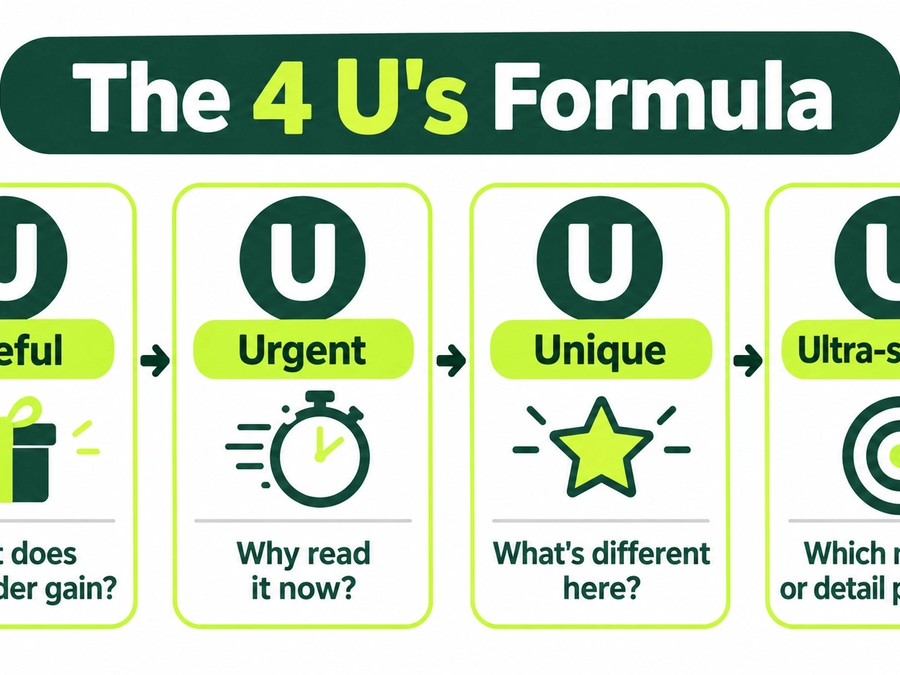
4 U's vs AIDA, PAS and BAB
The 4 U's isn't a rival to the classic page formulas. It works at a different level.
| Formula | What it is | Best for |
|---|---|---|
| 4 U's | A quality test for single lines | Headlines, subheads, bullets, subject lines |
| AIDA | Attention, Interest, Desire, Action | Planning landing pages and ads |
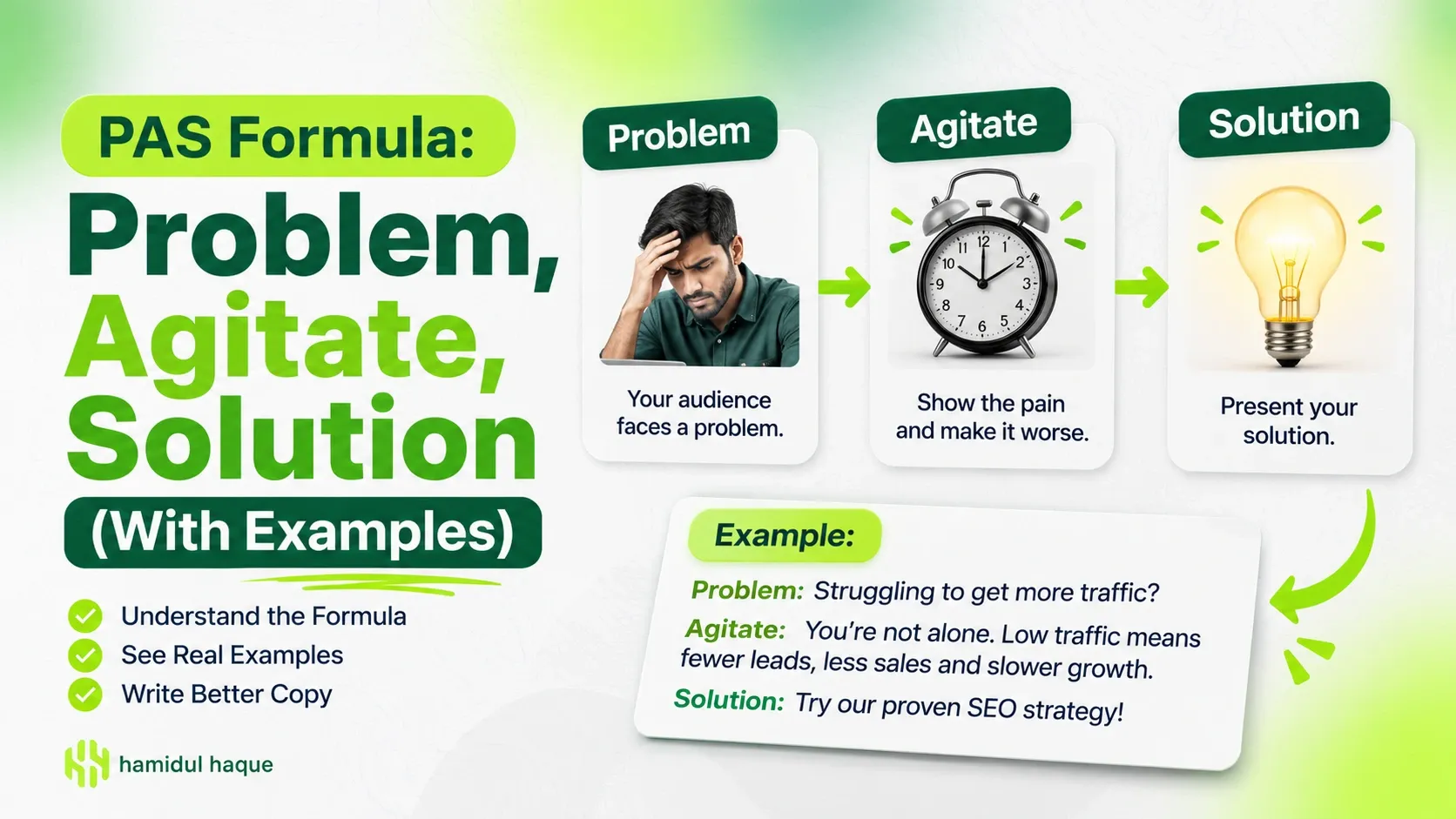
| PAS | Problem, Agitate, Solution | Short copy around a pain the reader feels |
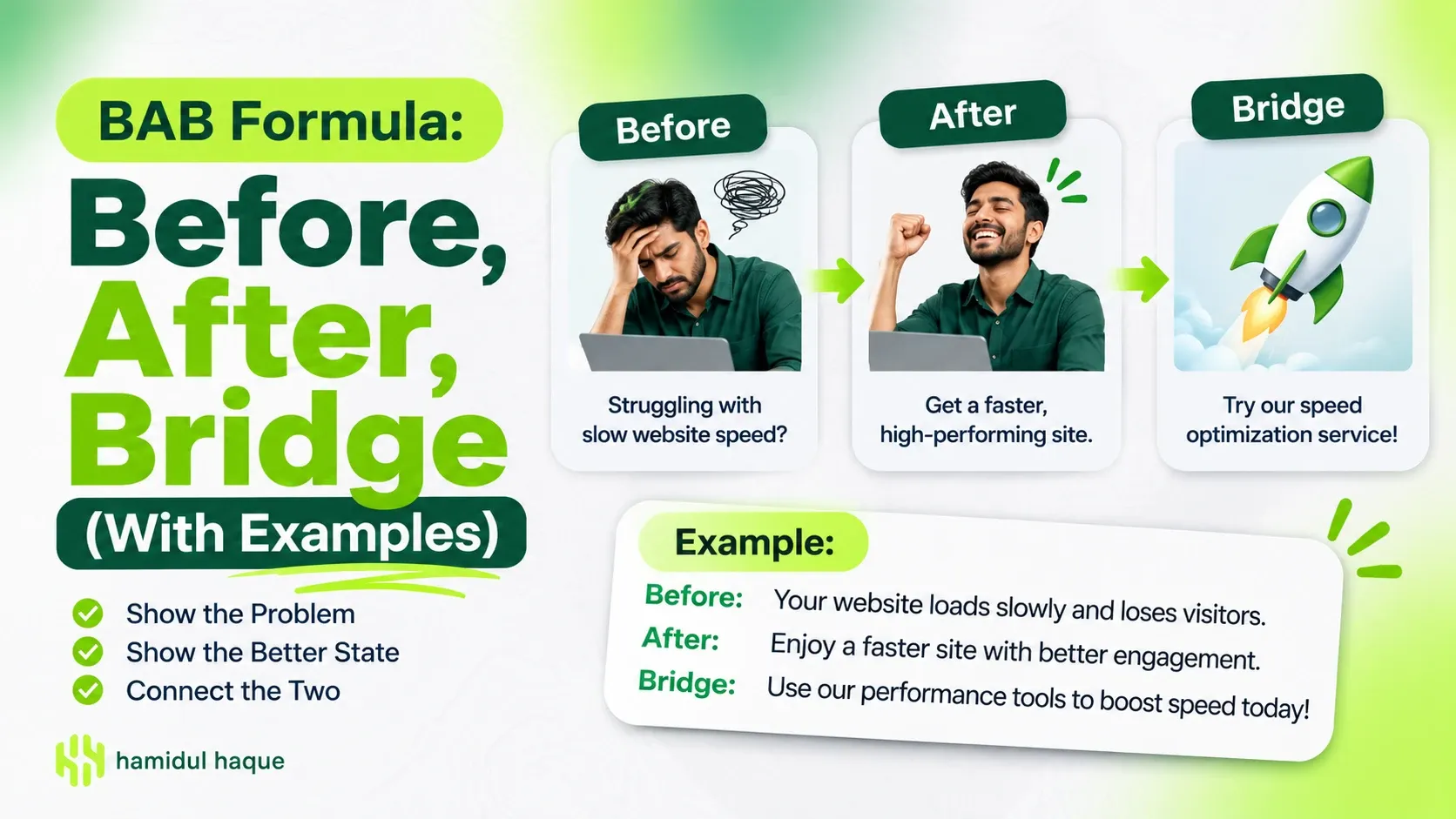
| BAB | Before, After, Bridge | Showing a transformation in a few lines |
In practice, plan the page with AIDA, PAS or the BAB formula, then use the 4 U's to test the headline, subheadings and bullets.
Common 4 U's Mistakes
- Faking urgency. False deadlines and fake scarcity damage trust and can create legal risk. If there's no real reason to act now, leave urgency out.
- Inventing numbers. Ultra-specific doesn't mean made up. Every figure in a headline should be something you can prove.
- Cramming in all four. A headline that ticks every box but reads like a list of keywords won't get clicked. Read it out loud before you publish.
- Confusing unique with hype. "Revolutionary" and "game-changing" aren't unique. A real method, angle or data point is.
- Ignoring search intent. For blog and SEO titles, a clever headline that doesn't match what people searched for won't rank. My guide to SEO for copywriters explains how to check intent first.
- Stopping at the headline. Use the same test on subheadings, bullets and call to action text.
Before you publish a page, run it through my website copy checklist to catch the rest.
Final Thoughts
The 4 U's formula won't write your headline for you, but it tells you exactly why a headline feels flat and what to fix. Make it useful first, add urgency only when it's real, find the angle that's different, and replace vague words with specific details. Copy the free scoring sheet, test your next five headlines and compare the scores before and after.
New to the craft? Start with what copywriting is. If you'd rather have an expert write the page for you, take a look at my SEO copywriting service, or get a conversion audit to see what to fix first.


 Hamidul Haque
 Nov 10, 2026